

The Comprehensive Guide to Anxiety ICD-10 Codes: Mastering Accuracy, Documentation and Compliance
January 4, 2026
Mastering Preoperative ICD-10 Codes: A Comprehensive Guide to Clearances, Documentation, and Billing Success
January 4, 2026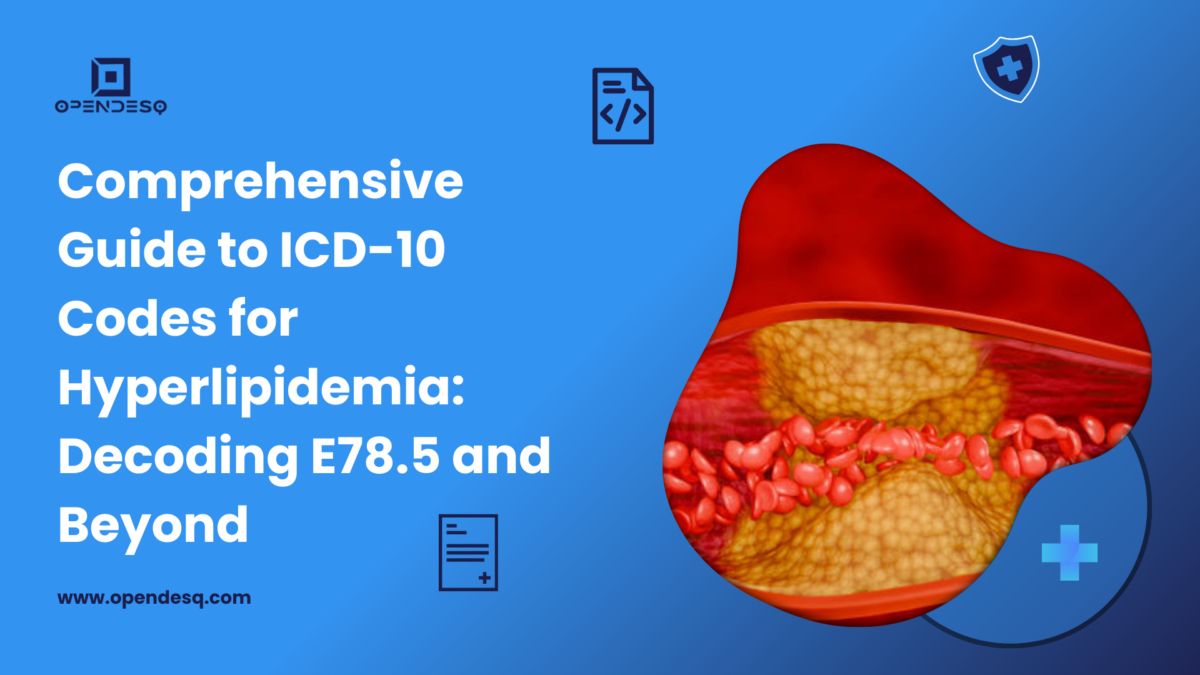
Introduction
Hyperlipidemia is one of the most frequently coded conditions in modern healthcare, yet it continues to generate confusion among medical coders and clinicians. A single coding error can cause payment delays, claim denials, and inconsistencies in patient records. These issues become even more challenging when documentation is vague or when multiple E78 sub codes appear similar at first glance.
Many professionals struggle to distinguish between pure, mixed, familial, and unspecified forms of hyperlipidemia. Others find it difficult to sequence codes correctly when comorbid conditions like diabetes, obesity, or ischemic heart disease are involved. Annual ICD 10 updates add another layer of complexity, making it necessary for coders to remain informed and compliant.
This guide solves all of these challenges by breaking down the coding process into clear and practical steps. It explores every E78 code in depth, provides clinical indicators for each one, and describes real world coding scenarios that reflect the cases coders handle every day. You will learn how to apply ICD 10 rules with confidence and how to avoid common errors that often lead to audits or claim denials.
This content is written with medical coders, CDI specialists, billers, physicians, nurses, and compliance teams in mind. Every section is designed to improve coding accuracy, streamline documentation, and support clean claims.
This article is reviewed by a Certified Professional Coder (CPC) and Registered Health Information Administrator (RHIA) to ensure expert level accuracy and reliability.
Understanding Hyperlipidemia and Its Coding Landscape
Definition of Hyperlipidemia
Hyperlipidemia is a clinical condition characterized by elevated levels of lipids in the bloodstream. These lipids include cholesterol, triglycerides, or both. The condition may be primary, secondary, familial, mixed, or unspecified depending on the patient’s clinical presentation.
The most common types include:
● Pure hypercholesterolemia
● Pure hyperglyceridemia
● Mixed hyperlipidemia
● Familial hyperlipidemia
● Unspecified hyperlipidemia
Each form has its own diagnostic indicators and clinical relevance, which directly impact ICD 10 code selection.
Physiological Basis and Clinical Significance
Lipids play an essential role in cell structure and metabolic processes, but excessive concentrations increase the risk of significant health problems. These include coronary artery disease, stroke, metabolic syndrome, and pancreatitis.
The physiological patterns vary widely. For example:
● Elevated LDL cholesterol suggests familial or primary hypercholesterolemia.
● Isolated high triglycerides often correlate with metabolic syndrome, diabetes, or alcohol use.
● Mixed elevations are strongly associated with obesity and insulin resistance.
● Severe chylomicronemia increases pancreatitis risk.
These differences are important for coders because ICD 10 codes are based on the specific clinical pattern.
Importance of Accurate ICD 10 Coding
Accurate coding for hyperlipidemia plays a critical role in healthcare operations.
Billing and Reimbursement
Correct code selection supports clean claim submission and decreases denials. Payers expect specificity, and nonspecific coding such as E78.5 can lead to unnecessary delays.
Patient Care and Treatment Planning
ICD 10 codes help clinicians track disease severity, initiate appropriate therapies, and monitor risk factors.
Public Health and Research
Detailed coding contributes to epidemiological data used for population health studies and policy making.
Compliance and Audit Prevention
Accurate coding reduces audit risk, ensures regulatory adherence, and prevents financial penalties for incorrect or unsupported coding.
Overview of the E78 Category for Disorders of Lipoprotein Metabolism
The ICD 10 CM category E78 captures all documented disorders related to lipoprotein metabolism. Many coders associate this category only with E78.5, but the spectrum of conditions is much broader. The E78 codes include pure hypercholesterolemia, pure hyperglyceridemia, mixed hyperlipidemia, familial disorders, lipoprotein deficiencies, and several other lipid metabolism abnormalities.
A strong understanding of the entire E78 category is essential for accurate code selection. Each code within the category describes a distinct physiological abnormality that must be supported by clinical documentation. Failing to identify the correct subtype can result in undercoding, incorrect sequencing, or the unnecessary use of unspecified codes.
Introducing E78 as the Primary Coding Category for Hyperlipidemia
The E78 category is structured to reflect the different metabolic pathways involved in lipid regulation. It includes conditions characterized by elevated levels of low density lipoprotein cholesterol, high density lipoprotein abnormalities, triglyceride disorders, and genetic or acquired forms of lipid dysfunction.
This category includes:
● Excess lipid disorders
● Deficient lipoprotein conditions
● Familial metabolic syndromes
● Mixed lipid abnormalities
● Unspecified lipid metabolism disorders
ICD 10 CM requires coders to select the most specific code available within the category. This means coders should always search for the highest available specificity before using E78.5 for unspecified hyperlipidemia.
Scope of the E78 Category
The E78 category expands far beyond the typical “high cholesterol” diagnosis used in general practice. It includes complex disorders such as hyperchylomicronemia, familial combined hyperlipidemia, abetalipoproteinemia, and other metabolic defects that significantly influence clinical management.
Accurate classification within this category helps coders:
● Capture the full nature of the lipid disorder
● Support severity based documentation
● Reduce reliance on nonspecific coding
● Improve quality metrics and billing accuracy
● Strengthen clinical communication
Understanding the full spectrum of E78 codes allows coders to distinguish between similar conditions and ensures proper sequencing when comorbidities complicate the diagnosis.
This foundation prepares us for the detailed exploration of each code in the next
Detailed Breakdown of Key Hyperlipidemia ICD 10 Codes
Below is the expanded and fully developed E78 code table as required in your outline. All descriptions, indicators, scenarios, and notes have been enhanced for clarity and real world usability.
Complete E78 Code Table
E78.0: Pure Hypercholesterolemia
Description:
Elevated LDL cholesterol and or total cholesterol with normal triglycerides. Often primary or familial in nature.
Clinical Indicators and Examples:
● LDL cholesterol typically above 190 mg per dL
● Normal triglyceride levels
● May have early onset cardiovascular disease
● Example: A patient with LDL C of 210 mg per dL, normal triglycerides, and family history of premature heart disease.
Notes and Excludes:
● Excludes: Familial hypercholesterolemia E78.01 when explicitly documented.
E78.00: Pure Hypercholesterolemia, Unspecified
Description:
Used when pure hypercholesterolemia is documented but without details about whether it is familial or primary.
Clinical Indicators and Examples:
● Elevated LDL C
● No mention of etiology
● Example: “Patient with high LDL cholesterol” but no specified type.
E78.01: Familial Hypercholesterolemia
Description:
A genetically inherited form of high LDL cholesterol that often presents in childhood or early adulthood.
Clinical Indicators and Examples:
● Very high LDL levels (often above 250 mg per dL)
● Presence of tendon xanthomas
● Early coronary artery disease
● Documented genetic testing or strong clinical suspicion
● Example: A 32 year old patient with LDL C of 280 mg per dL and a family history of early myocardial infarction.
E78.1: Pure Hyperglyceridemia
Description:
Isolated elevation of triglycerides with normal LDL and total cholesterol.
Clinical Indicators and Examples:
● Triglycerides above 150 mg per dL, often above 500 in severe cases
● Associated with metabolic syndrome, diabetes, or alcohol use
● Example: A diabetic patient with triglycerides of 350 mg per dL and normal LDL.
Notes and Excludes:
● Excludes: Familial hyperchylomicronemia E78.3
E78.2: Mixed Hyperlipidemia
Description:
Concurrently elevated total cholesterol, LDL cholesterol, and triglycerides.
Clinical Indicators and Examples:
● Common in metabolic syndrome and obesity
● May need combination drug therapy
● Example: LDL of 160 mg per dL, triglycerides of 280 mg per dL.
Notes and Excludes:
● Excludes: Familial combined hyperlipidemia E78.4
E78.3: Hyperchylomicronemia
Description:
Markedly elevated chylomicrons and triglycerides. Often familial and may lead to pancreatitis.
Clinical Indicators and Examples:
● Triglycerides often above 1000 mg per dL
● Eruptive xanthomas
● Acute pancreatitis risk
● Example: A patient presenting with abdominal pain and triglycerides of 1600 mg per dL.
Notes and Excludes:
● Excludes: Familial hyperglyceridemia E78.1
E78.4: Other Hyperlipidemia and Mixed Hyperlipidemia
Description:
Includes a group of mixed or specified lipid disorders not classified under E78.0 to E78.3.
Clinical Indicators and Examples:
● Broad beta disease
● Genetic mixed lipid disorders
● Example: A patient with documented broad beta hyperlipoproteinemia.
Notes and Excludes:
● Excludes: Familial combined hyperlipidemia E78.41
E78.41: Familial Combined Hyperlipidemia
Description:
A hereditary disorder characterized by fluctuating elevations in triglycerides and cholesterol.
Clinical Indicators and Examples:
● Family history of premature cardiovascular disease
● Variable lipid patterns
● Example: A patient whose LDL and triglycerides vary widely between visits, with a strong family history.
E78.49: Other Hyperlipidemia
Description:
Use for lipid disorders that are documented but do not meet criteria for more specific codes.
Clinical Indicators and Examples:
● Rare or unusual types of lipid abnormalities
● Example: Provider documents a specific lipid disorder not found elsewhere in E78.0 to E78.41.
E78.5: Unspecified Hyperlipidemia
Description:
The most frequently misused code. Should only be assigned when documentation provides no further details.
Clinical Indicators and Examples:
● Documentation states “hyperlipidemia” or “high cholesterol” without subtype
● No mention of LDL, triglycerides, or etiology
● Example: “Patient with hyperlipidemia. Continue statin therapy.”
Expert Tip:
Avoid E78.5 unless absolutely necessary. Query for clarification when lipid patterns are documented in labs but not stated in the diagnosis form.
E78.6: Lipoprotein Deficiency
Description:
Covers disorders such as abetalipoproteinemia or hypobetalipoproteinemia, where lipoprotein levels are abnormally low.
Clinical Indicators and Examples:
● Low or absent LDL
● Malabsorption issues
● Neurological symptoms in severe cases
● Example: A patient with extremely low LDL and fat soluble vitamin deficiencies.
E78.8: Other Disorders of Lipoprotein Metabolism
Description:
Includes less common conditions involving abnormal lipoprotein processing.
Clinical Indicators and Examples:
● Lipoprotein glomerulopathy
● Hyper alpha lipoproteinemia
● Example: A patient diagnosed with elevated HDL due to metabolic variation.
E78.9: Disorder of Lipoprotein Metabolism, Unspecified
Description:
Used when documentation states a lipoprotein metabolism disorder without specific detail.
Clinical Indicators and Examples:
● Extremely vague documentation
● More general than E78.5
● Example: “Lipoprotein disorder” without any subtype or lab indication.
General Coding Guidelines for Hyperlipidemia
Primary vs. Secondary Diagnosis Selection
When Hyperlipidemia Is the Primary Diagnosis
Hyperlipidemia is assigned as the primary diagnosis when the main reason for the encounter is evaluation, management, or treatment of abnormal lipid levels. Examples include:
● Routine lipid follow up
● Medication management for dyslipidemia
● Assessment of response to statins or triglyceride lowering therapy
● Workup for suspected familial hyperlipidemia
When Hyperlipidemia Is a Secondary Diagnosis
Hyperlipidemia becomes a secondary diagnosis when it co exists with another condition that is the primary focus of care. Examples include:
● Diabetes visit where glucose control is the main reason
● Hypertension management visit
● Visit for chest pain or ischemic heart disease
● Renal disease follow up
● Obesity management appointment
Coders must always analyze the provider documentation to establish the most appropriate sequencing.
Understanding “Code Also” and “Excludes” Notes
ICD 10 CM uses instructional notes to ensure accurate and non conflicting code assignment. Coders must always check these notes in the Tabular List.
Code Also
This instruction means that more than one code may be required to fully describe the condition. It does not imply sequencing order. The provider’s documentation determines the correct sequence.
Examples relevant to hyperlipidemia may include:
● Hyperlipidemia with underlying endocrine disorders
● Hyperlipidemia with renal disease
● Hyperlipidemia due to medications
Coders must assign both codes when instructed.
Excludes 1 Notes
These identify situations where two conditions cannot be coded together.
Example:
● E78.0 excludes familial hypercholesterolemia E78.01
If familial is documented, E78.0 must not be used.
Excludes 2 Notes
These indicate that the condition is not part of the code but may be coded alongside it if present.
Example:
● E78 category excludes certain endocrine disorders
● If both exist, both may be coded
Coders must differentiate between Excludes 1 and Excludes 2 to prevent claim conflicts.
Importance of Specificity in Code Selection
Hyperlipidemia must be coded to the highest level of specificity based on provider documentation. Coders should always identify the type, etiology, and any associated conditions before finalizing a code.
Expert Tip: Drill Down to the Highest Specificity
Do not automatically select E78.5 Unspecified Hyperlipidemia.
Use it only if:
● Lipid type is not documented
● No pattern of LDL or triglyceride elevation is described
● Provider gives a general diagnosis without further detail
If lab results show a specific pattern but the diagnosis remains unspecified, coders should query the provider for clarification.
Using the Alphabetic Index and Tabular List Correctly
ICD 10 CM coding rules require coders to use a two step method:
Step 1: Alphabetic Index
Locate the main term such as:
● Hyperlipidemia
● Cholesterolemia
● Glyceridemia
● Lipoprotein disorder
This step gives the code range to explore.
Step 2: Tabular List Verification
Always confirm the code in the Tabular List to:
● Identify sub categories
● Review Excludes notes
● Apply “code also” rules
● Determine any additional coding requirements
Skipping this step often leads to incorrect or incomplete code assignment.
Expert Tip: Index First, Tabular Second
This ensures coders do not miss important instructional notes or more specific subcodes.
Laterality and Other Modifiers
Hyperlipidemia does not use laterality, since lipid disorders affect the entire metabolic system rather than one side of the body. However, coders must review related conditions where laterality is required, such as vascular diseases or renal complications associated with hyperlipidemia.
Coding Hyperlipidemia with Comorbidities
Hyperlipidemia rarely exists alone. It frequently coexists with diabetes, hypertension, obesity, metabolic syndrome, heart disease, and kidney disorders. These conditions influence sequencing, code selection, and clinical interpretation.
Common Comorbidities Associated with Hyperlipidemia
The most frequent comorbid conditions include:
● Diabetes Mellitus (E08–E13)
● Heart Disease (I20–I25, I50)
● Obesity (E66)
● Hypertension (I10–I15)
● Renal Disease (N18 chronic kidney disease)
● Metabolic syndrome (E88.81)
● Thyroid disorders (E03–E05)
● Alcohol use disorder (F10)
These must be coded when they affect patient care, treatment, or clinical decision making.
Sequencing Rules for Hyperlipidemia and Comorbidities
Correct sequencing depends on whether hyperlipidemia is:
● The main reason for the encounter
● A manifestation of another condition
● A risk factor being addressed secondarily
● A complication or consequence
When Hyperlipidemia Is the Primary Condition
It is sequenced first when the visit is focused on lipid management.
Example:
● Follow up for uncontrolled LDL elevation
● Adjusting statin therapy
● Evaluation for familial hypercholesterolemia
When Hyperlipidemia Is Secondary
Hyperlipidemia becomes secondary when another disease is the primary focus.
Examples:
● Diabetes evaluation
● Heart disease follow up
● Hypertension management
● Chronic kidney disease monitoring
Combination Codes and Secondary Hyperlipidemia
Some conditions cause hyperlipidemia. In those situations, coders must assign:
● The underlying condition first
● The hyperlipidemia code second
Examples:
● Diabetes induced mixed hyperlipidemia
● Hypothyroidism associated hyperlipidemia
● Medication induced lipid abnormalities
Practical Coding Examples
This section converts the rules into real world cases so coders can apply them easily.
Scenario 1: Type 2 Diabetes with Mixed Hyperlipidemia
Documentation:
A patient has type 2 diabetes and mixed hyperlipidemia. The visit is for diabetes management, but the provider also assesses lipid control.
Correct Coding:
● E11.69 Type 2 diabetes with other specified complication
● E78.2 Mixed hyperlipidemia
Sequencing Rationale:
The primary diagnosis is the reason for the encounter: diabetes.
Mixed hyperlipidemia is coded second as a related condition.
Scenario 2: Atherosclerotic Heart Disease with Pure Hypercholesterolemia
Documentation:
Patient has coronary artery disease and elevated LDL cholesterol. The focus of care is CAD management.
Correct Coding:
● I25.10 Atherosclerotic heart disease
● E78.0 Pure hypercholesterolemia
Sequencing Rationale:
CAD is the primary condition. Hypercholesterolemia is a major risk factor and must be coded as a secondary diagnosis.
Scenario 3: Obesity with Hypertriglyceridemia
Documentation:
The patient presents for obesity management. Labs show high triglycerides but normal LDL.
Correct Coding:
● E66.9 Obesity, unspecified (or specific subtype if documented)
● E78.1 Pure hyperglyceridemia
Sequencing Rationale:
Obesity is the primary disease addressed. Hyperglyceridemia is part of the metabolic profile.
Scenario 4: Chronic Kidney Disease Stage 3 with Hyperlipidemia
Documentation:
A nephrology follow up notes CKD stage 3 and hyperlipidemia. The visit focuses on kidney management.
Correct Coding:
● N18.30 CKD stage 3 unspecified
● E78.5 Unspecified hyperlipidemia (or more specific type if documented)
Sequencing Rationale:
CKD is the primary reason for the encounter.
Scenario 5: Hypothyroidism Induced Hyperlipidemia
Documentation:
Provider states: “Hyperlipidemia due to hypothyroidism.”
Correct Coding:
● E03.9 Hypothyroidism, unspecified
● E78.5 Unspecified hyperlipidemia (or specific type if diagnosed)
Sequencing Rationale:
Hypothyroidism is the underlying cause, so it must be coded first.
Scenario 6: Multiple Comorbidities with Specific Type Identified
Documentation:
Patient with hypertension, obesity, and familial combined hyperlipidemia. Visit is for lipid disorder evaluation.
Correct Coding:
● E78.41 Familial combined hyperlipidemia
● I10 Hypertension
● E66.9 Obesity
Sequencing Rationale:
Hyperlipidemia is the primary focus.
Expert Tip: Understand the Impact of Comorbidities
Hyperlipidemia must always be coded when it affects:
● treatment
● medication selection
● clinical monitoring
● risk stratification
● care planning
A missed hyperlipidemia code can undermine risk adjustment and clinical accuracy.
Achieving Accuracy and Compliance in Hyperlipidemia Coding
Documentation is the backbone of accurate ICD 10 coding. Without precise clinical details, coders cannot assign specific E78 codes, and this leads to denials, audit flags, and quality reporting issues.
Documentation Requirements for Hyperlipidemia Coding
The Clinician’s Role in Documentation
Clinicians must provide clear and complete documentation that accurately reflects the patient’s lipid disorder. Coders depend on this information to assign the correct sub code within the E78 category. Vague terms like “high cholesterol” or “hyperlipidemia” reduce specificity and often force coders to use E78.5.
What Providers Should Document Clearly
● The specific type of hyperlipidemia
● Whether it is primary, secondary, or familial
● The severity of lipid abnormality
● Relevant lab values when available
● Any risk factors or comorbidities
● Whether hyperlipidemia is related to another condition
● Whether it is drug induced or genetic
● The current treatment plan such as statins, fibrates, or diet therapy
Key Elements to Document for Accurate Coding
1. Type of Hyperlipidemia
Examples:
● Pure hypercholesterolemia
● Pure hyperglyceridemia
● Mixed hyperlipidemia
● Familial hypercholesterolemia
● Familial combined hyperlipidemia
2. Etiology or Cause
Providers should specify whether the lipid abnormality is:
● Primary
● Familial
● Secondary to diabetes
● Secondary to renal disease
● Drug induced
● Related to endocrine disorders
3. Severity and Clinical Relevance
Examples:
● LDL greater than 190 mg per dL
● Triglycerides greater than 1000 mg per dL
● Risk of pancreatitis
● Presence of xanthomas
● Impact on cardiovascular risk
4. Comorbidities and Relationships
Providers must clarify whether hyperlipidemia is impacting or being impacted by:
● Diabetes
● Heart disease
● Obesity
● Kidney disease
● Metabolic syndrome
● Hypertension
5. Treatment and Monitoring
Documentation should include:
● Medications
● Dietary interventions
● Lab monitoring frequency
● Treatment response
This supports medical necessity and compliance.
Querying the Provider for Clarification
When documentation is unclear, coders must initiate a clear, compliant query.
When to Query
You should query when:
● The type of hyperlipidemia is not specified
● Lab results show a pattern but the diagnosis is vague
● There is potential familial involvement
● Hyperlipidemia may be secondary to another condition
● Documentation conflicts with previous records
Expert Tip: When in Doubt, Query the Provider
Clarification prevents incorrect coding, enhances compliance, and reduces audit risk.
Common Hyperlipidemia Coding Errors and How to Avoid Them
This is one of the most important sections for coders. These mistakes cause denials, audits, and compliance issues.
Error 1: Coding “Unspecified” (E78.5) When More Specific Information Exists
This is the most common mistake.
Why it Happens
● Provider documents only “hyperlipidemia”
● Coders do not review lab reports
● Lack of provider query
How to Avoid
● Check lab values
● Check previous clinical notes
● Query the provider to confirm type
Differentiation Opportunity:
Overuse of E78.5 is a known audit trigger because specificity is required when available.
Error 2: Incorrect Sequencing with Comorbidities
Examples
● Coding hyperlipidemia before diabetes when diabetes is the primary focus
● Coding hyperlipidemia as primary when visit is for CAD management
How to Avoid
● Identify the primary reason for encounter
● Check comorbidity relationships
● Follow ICD 10 sequencing rules
Error 3: Ignoring “Excludes” Notes
This leads to conflicting diagnoses.
Examples
● Using E78.0 and E78.01 together
● Using E78.1 and E78.3 together
How to Avoid
● Always review tabular list notes
● Apply Excludes 1 and Excludes 2 correctly
Error 4: Failure to Stay Updated with Annual ICD 10 Changes
ICD 10 updates yearly on October 1st.
How to Avoid
● Subscribe to official updates
● Attend coder education sessions
● Review CMS and AHA Coding Clinic updates regularly
Error 5: Lack of Detailed Documentation
This is a major audit trigger.
How to Avoid
● Encourage clinicians to document type, severity, and relationships
● Train providers on common documentation gaps
● Use structured templates or EHR prompts
Mini Case Studies: Applying Hyperlipidemia Codes in Real Practice
Case studies help coders translate theory into real decisions. These scenarios reflect common clinical presentations that create confusion, including familial disorders, diabetes-related hyperlipidemia, and drug induced lipid abnormalities.
Each case follows this structure:
● Patient presentation
● Documentation review
● Clinical indicators
● Correct ICD 10 codes
● Sequencing rationale
● Key coder takeaway
CASE STUDY 1: Familial Hypercholesterolemia
(Addresses the pain point: differentiating familial vs acquired forms.)
Patient Presentation
A 28 year old patient presents with extremely high LDL levels identified during routine testing. The patient has tendon xanthomas and reports that several family members experienced heart attacks before age 50. Genetic testing confirms a pathogenic variant associated with familial hypercholesterolemia.
Provider Documentation
“Familial hypercholesterolemia. LDL is 260 mg per dL. Strong family history of premature cardiovascular events. Continue high dose statin therapy.”
Clinical Indicators
● LDL greater than 250 mg per dL
● Tendon xanthomas
● Early family cardiovascular history
● Genetic confirmation
Correct ICD 10 Code
● E78.01 Familial hypercholesterolemia
Sequencing Rationale
This is the primary diagnosis and the purpose of the encounter.
Coder Takeaway
Always code E78.01 when familial involvement is explicitly documented or genetically confirmed. Do not use E78.0 or E78.5 in these cases.
CASE STUDY 2: Mixed Hyperlipidemia Secondary to Type 2 Diabetes
Patient Presentation
A 59 year old patient with long standing type 2 diabetes visits for glucose management. The provider also reviews recent lipid labs showing high LDL and elevated triglycerides (mixed pattern).
Provider Documentation
“Type 2 diabetes requiring medication adjustment. Mixed hyperlipidemia likely related to metabolic dysfunction from diabetes. Continue lipid lowering therapy.”
Clinical Indicators
● LDL elevation
● Triglyceride elevation
● Diabetes with poor metabolic control
Correct ICD 10 Codes
● E11.69 Type 2 diabetes with other specified complication
● E78.2 Mixed hyperlipidemia
Sequencing Rationale
The primary reason for the visit is diabetes management.
Hyperlipidemia is coded second because it is a complication associated with the primary diagnosis.
Coder Takeaway
If the visit centers on diabetes, diabetes codes go first even when lipids are also abnormal. Always evaluate the clinical intention of the encounter.
CASE STUDY 3: Drug Induced Hyperlipidemia
Patient Presentation
A 47 year old female patient is on long term corticosteroid therapy for an autoimmune condition. Recent labs show significantly elevated triglycerides.
Provider Documentation
“Hyperlipidemia secondary to prolonged corticosteroid use. Triglycerides elevated above 300 mg per dL. Plan to modify steroid regimen and manage lipid levels.”
Clinical Indicators
● Elevated triglycerides
● Clear documentation linking hyperlipidemia to medication
● Steroid induced metabolic effects
Correct ICD 10 Codes
● E78.1 Pure hyperglyceridemia
● T38.0X5A Adverse effect of glucocorticoids or synthetic analogues, initial encounter
Sequencing Rationale
The adverse effect code is required to identify medication involvement.
Hyperlipidemia is coded to reflect the manifestation.
Coder Takeaway
Drug induced hyperlipidemia requires two codes:
- The adverse effect code
- The specific hyperlipidemia code
Do not use unspecified codes when the cause is clearly documented.
INTERACTIVE HYPERLIPIDEMIA CODING FLOWCHART
Below is the complete flowchart in a clean, logical sequence.
START
1. Is Hyperlipidemia Documented in the Chart?
● No → Do not code hyperlipidemia. STOP.
● Yes → Proceed to Step 2.
2. Is the Type of Hyperlipidemia Specified?
● Yes → Continue to Step 3.
● No → Assign E78.5 Unspecified Hyperlipidemia
BUT query the provider if any pattern is visible in labs.
Then STOP.
3. What Type of Hyperlipidemia Is Documented?
If high LDL with normal triglycerides:
→ Evaluate for:
● Pure hypercholesterolemia → E78.0
● Familial hypercholesterolemia → E78.01
● Unspecified subtype → E78.00
If high triglycerides with normal LDL:
→ Assign E78.1 Pure Hyperglyceridemia
If both cholesterol and triglycerides are elevated:
→ Mixed patterns → E78.2 Mixed Hyperlipidemia
If very high chylomicrons and triglycerides >1000 mg/dL, xanthomas, pancreatitis risk:
→ Assign E78.3 Hyperchylomicronemia
If familial combined lipid elevation or other specified mixed disorders:
→ Assign E78.41 or E78.4 depending on documentation
If other specified lipid metabolism disorder not fitting above types:
→ Assign E78.49
If lipoprotein deficiency is documented:
→ Assign E78.6 Lipoprotein Deficiency
If other lipoprotein metabolism disorders are present:
→ Assign E78.8
If lipid or lipoprotein disorder is documented but unclear:
→ Assign E78.9 (broader than E78.5)
4. Are There Comorbidities Affecting Sequence?
Is Hyperlipidemia Secondary to Another Condition?
Examples:
● Diabetes
● Hypothyroidism
● Kidney disease
● Medication use
● Alcohol use disorder
If Yes:
→ Code the underlying condition first, hyperlipidemia second.
→ Follow combination code rules.
If No:
→ Hyperlipidemia may be primary if it is the reason for the visit.
5. Is the Condition Drug Induced?
● If Yes →
Assign:
- Appropriate T code for adverse effect
- Appropriate E78 code for lipid abnormality
● If No →
Proceed normally.
6. Do “Excludes 1” Notes Apply?
Examples:
● Do not code E78.0 with E78.01
● Do not code E78.1 with E78.3
If Yes → Remove conflicting code.
If No → Continue.
7. Final Verification Checklist
Before submitting claims, verify:
✔ Documentation supports the code
✔ Type is clearly identified
✔ Underlying causes are sequenced correctly
✔ Excludes notes are respected
✔ Provider queries are resolved
✔ Labs match the diagnosis (if referenced)
✔ No overuse of E78.5
END
The correct E78 code pathway is now determined.
The Financial Impact of Accurate Hyperlipidemia Coding
Hyperlipidemia codes are not only clinical indicators. They also influence how healthcare organizations are reimbursed and evaluated. Correctly identifying the type, cause, and severity of lipid disorders strengthens financial performance and compliance efforts.
Reimbursement Optimization
Precise coding supports appropriate payments in outpatient, inpatient, and value based models. Payers expect documentation that justifies medical necessity for:
● lipid panels
● statin therapy
● repeat monitoring
● specialist referrals
● chronic condition management
When E78.5 (unspecified hyperlipidemia) is used incorrectly, it may suggest incomplete documentation, leading to:
● denials
● reduced reimbursement
● medical necessity queries
Using specific codes such as E78.2 or E78.01 enhances claim clarity and reduces payer scrutiny.
Risk Adjustment Models
In risk adjustment programs, such as Medicare Advantage or ACO models, chronic diseases contribute to a patient’s risk score. Hyperlipidemia is a modifier for cardiovascular risk and metabolic disease categories.
Accurate E78 coding improves:
● risk prediction accuracy
● patient stratification
● care management planning
● value based reimbursement
For example:
● Mixed hyperlipidemia (E78.2) paired with diabetes indicates higher metabolic complexity than E78.5 alone.
This influences overall risk scoring.
Quality Measures and Performance Indicators
Accurate coding connects directly to clinical quality programs such as:
● HEDIS
● MIPS
● ACO Quality Measures
● Preventive care performance metrics
Hyperlipidemia impacts measures like:
● statin therapy for ASCVD
● lipid screening frequency
● cardiovascular prevention metrics
● management of diabetes with comorbid hyperlipidemia
Incorrect codes may distort an organization’s performance data.
Compliance and Audit Risk Mitigation
Audits often target conditions with unclear documentation or vague coding habits.
Common triggers include:
● frequent use of E78.5
● inconsistent documentation of lipid patterns
● missing links between hyperlipidemia and comorbidities
● failure to document familial or secondary causes
Clear documentation prevents:
● RAC audits
● payer medical record requests
● coding compliance violations
● financial penalties
Accurate hyperlipidemia coding strengthens institutional compliance and reduces risk exposure.
Hyperlipidemia Coding for Specialty Practices
Different specialties focus on different aspects of hyperlipidemia. Coders must understand each specialty’s priorities to ensure anatomical, clinical, and coding accuracy.
Cardiology
Cardiologists treat patients at high risk for cardiovascular disease, so hyperlipidemia documentation is typically more detailed.
Coders should expect:
● documented LDL targets
● identification of familial hypercholesterolemia
● linkage between hyperlipidemia and CAD
● statin intensity documentation
● presence of xanthomas or genetic risk indicators
Special considerations:
● ASCVD patients often require E78.0 or E78.2, not E78.5
● Sequencing must reflect CAD as primary when relevant
Endocrinology
Endocrinologists manage complex metabolic conditions, often involving secondary hyperlipidemia.
Coders should expect:
● hyperlipidemia linked to diabetes
● metabolic syndrome indicators
● obesity and insulin resistance data
● thyroid dysfunction related lipid abnormalities
Special considerations:
Don’t forget:
● E11.69 + E78.x for diabetes induced hyperlipidemia
● E03.9 + E78.x for hypothyroidism related cases
Pediatrics
Pediatric hyperlipidemia often involves genetic conditions rather than lifestyle causes.
Coders should expect:
● familial hypercholesterolemia
● familial combined hyperlipidemia
● genetic testing references
● early onset cardiovascular risk indicators
Special considerations:
E78.01 and E78.41 are more common in pediatric coding than in adult primary care.
Primary Care
Most hyperlipidemia diagnoses originate in primary care settings.
Coders should expect:
● general lipid screening
● lifestyle modification plans
● early identification of risk factors
Special considerations:
Primary care documentation is often less specific, which increases the risk of overusing E78.5.
Coders may need to query providers more frequently.
FAQs About Hyperlipidemia ICD 10 Codes
These questions reflect the real challenges medical coders face during daily documentation and billing tasks.
1. What is the difference between E78.0 and E78.5?
E78.0 Pure Hypercholesterolemia
This code applies when LDL cholesterol or total cholesterol is elevated while triglycerides remain normal. It requires documentation of pure or isolated LDL elevation.
E78.5 Unspecified Hyperlipidemia
This is used only when the provider gives no details about lipid type and the documentation is too vague to identify a specific subtype.
Key Point:
If labs or clinical notes show a pattern, coders should not default to E78.5. Provider query is recommended.
2. How do I code hyperlipidemia when documentation only says “high cholesterol”?
If the provider uses the general term “high cholesterol” with no further detail, the correct code is:
● E78.5 Unspecified Hyperlipidemia
However, if the patient’s lipid panel shows specific abnormalities, it is best practice to:
● Query the provider
● Request clarification
● Obtain the specific type for accurate coding
3. When should I query the provider for more information about hyperlipidemia?
Query the provider when:
● Lipid labs show a pattern but diagnosis remains vague
● Familial or genetic involvement is suspected
● Hyperlipidemia may be secondary to another disease
● The clinical picture suggests mixed hyperlipidemia, but documentation does not state it
● Documentation conflicts with previous notes
Queries ensure clarity, compliance, and precise code selection.
4. Does medication use affect hyperlipidemia coding?
Yes.
When hyperlipidemia is drug induced, coders must assign:
- A T code for the adverse drug effect
- The specific E78 code that reflects the lipid abnormality
Example:
Hyperlipidemia caused by corticosteroids →
● T38.0X5A adverse effect of steroid
● E78.1 or E78.2, depending on pattern
5. How do I code hyperlipidemia that is a direct result of diabetes?
Use:
● E11.69 Type 2 diabetes with other specified complication
● The correct E78 code (example: E78.2 for mixed hyperlipidemia)
This shows hyperlipidemia as a metabolic complication of diabetes.
6. What are the common audit triggers for hyperlipidemia coding?
● Overuse of E78.5 unspecified hyperlipidemia
● Lack of documentation supporting code selection
● Assigning hyperlipidemia as primary when another condition is the true focus
● Ignoring Excludes 1 notes
● Missing links between hyperlipidemia and comorbidities
● Coding familial types without provider documentation
Avoiding these issues improves compliance and reduces audit exposure.
Essential Tools and Resources for Hyperlipidemia Coding
These tools help coders achieve accuracy, stay compliant, and remain updated.
1. Official ICD 10 CM Coding Manual (Latest Edition)
The authoritative source for all code definitions, guidelines, and instructions.
2. AHA Coding Clinic for ICD 10 CM/PCS
Provides official coding advice from experts and is extremely valuable for complex cases.
3. CMS (Centers for Medicare and Medicaid Services) Website
Contains national guidelines, updates, transmittals, and official coding rules.
4. Electronic Health Record (EHR) Systems
A critical platform for:
● Provider documentation
● Code lookup
● Clinical decision support
● Query management
5. Medical Coding Software Platforms
Examples include:
● Optum360
● AAPC Coder
● Find A Code
These tools offer:
● Code verification
● Clinical indicators
● Audit tracking
● Guideline integration
Staying Current: ICD 10 CM Updates and Future Trends
The ICD 10 CM code set is updated annually on October 1st.
Coders must review:
● New codes
● Deleted codes
● Revised guidelines
● AHA Coding Clinic changes
What’s Next for Hyperlipidemia Codes?
Future updates may focus on:
● More differentiation among genetic lipid disorders
● Enhanced specificity for mixed lipid abnormalities
● New codes reflecting emerging cardiovascular risk factors
● More structured classification of secondary hyperlipidemia
Coders should remain alert to guideline changes affecting the E78 category.
Conclusion
Hyperlipidemia coding demands more than selecting E78.5. Coders must understand the physiological basis, distinguish between pure, mixed, familial, and secondary forms, and apply ICD 10 CM rules with precision.
Key takeaways include:
● Use the most specific E78 code available
● Avoid unspecified hyperlipidemia when documentation allows for specificity
● Sequence codes correctly when comorbidities are present
● Understand Excludes 1 and Excludes 2 notes
● Query the provider whenever clarity is needed
● Use official resources such as ICD 10 CM manuals and AHA Coding Clinic
Accurate hyperlipidemia coding supports:
● Better patient care
● Clear clinical communication
● Cleaner claims
● Reduced audit risk
● Stronger financial performance
● Reliable quality reporting
By mastering the entire E78 code range from E78.0 to E78.9, coders can ensure compliance, enhance billing accuracy, and contribute to high quality, data driven patient care.
This article is reviewed regularly to reflect the latest ICD 10 CM updates, ensuring ongoing accuracy and relevance.