
Chest Pain ICD-10 Codes: The Definitive Guide for Medical Coders and Clinicians (R07.9 and Beyond)
January 4, 2026
Comprehensive Guide to ICD-10 Codes for Allergic Reactions
January 4, 2026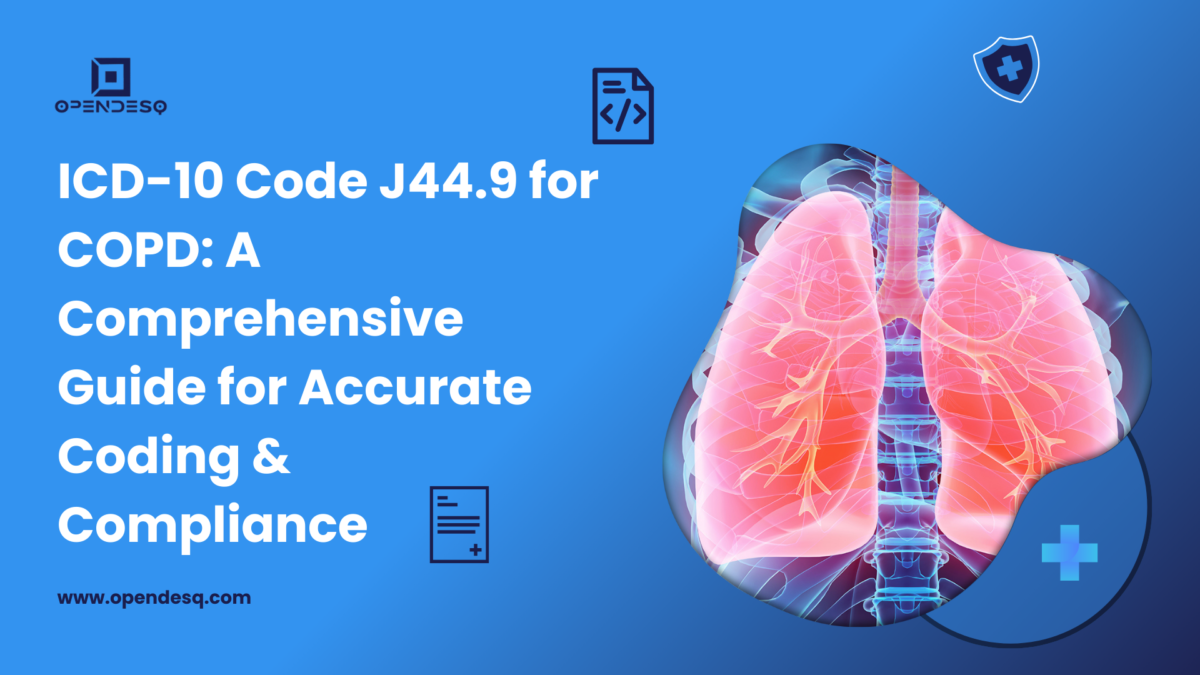
Introduction
If you work in medical coding, billing, or clinical documentation, chances are you have encountered ICD-10 code J44.9 more times than you can count. Chronic Obstructive Pulmonary Disease is common, complex, and often poorly documented. Many professionals find themselves defaulting to the unspecified code J44.9 and later wondering whether that choice could lead to claim denials, reduced reimbursement, or audit risk.
COPD coding is not as simple as assigning a single diagnosis code. The difference between an acute exacerbation, a lower respiratory infection, or a specific type like emphysema can completely change code selection, sequencing, and payment outcomes. When documentation lacks clarity, J44.9 becomes the fallback, but overuse of this code raises red flags for payers and auditors.
This comprehensive guide is designed to remove that uncertainty. You will learn exactly what J44.9 represents, when it is appropriate to use it, and when it should be avoided in favor of more specific COPD codes. We will connect official ICD-10-CM guidelines with real world coding scenarios, documentation tips, and compliance strategies so you can code with confidence.
By the end of this guide, you will have practical tools to improve coding accuracy, support medical necessity, reduce audit exposure, and ensure optimal reimbursement while staying fully compliant with ICD-10-CM rules.
Understanding J44.9: The Unspecified COPD Code
Introduction to ICD-10 Code J44.9
ICD-10 code J44.9 represents Chronic obstructive pulmonary disease, unspecified. It belongs to category J44, which covers other chronic obstructive pulmonary disease conditions. This code is used when COPD is clearly diagnosed, but the documentation does not provide enough detail to assign a more specific code.
J44.9 exists to ensure that a valid diagnosis can still be reported when clinical documentation is limited. However, its use comes with consequences. Because it lacks clinical specificity, it may not fully reflect disease severity, resource utilization, or patient complexity.
For coders and billers, J44.9 is often a signal to pause and review the record more carefully. While it is a valid ICD-10-CM code, it should not be the first choice when more detailed documentation is available or can be obtained.
Key takeaways
- J44.9 is a catch all code for COPD when no additional details are documented
- It should be used only when higher specificity cannot be supported
- Overuse can impact reimbursement, audits, and quality reporting
Definition and Official Description of J44.9
According to the official ICD-10-CM manual, J44.9 is defined as Chronic obstructive pulmonary disease, unspecified. This definition applies when the provider documents COPD but does not specify acute exacerbation, infection, or a defined COPD subtype.
The official ICD-10-CM guidelines include important notes that influence how J44.9 is applied:
- J44 excludes emphysema codes found in category J43
- More specific COPD codes should be assigned when documentation supports them
- Additional codes may be required to capture associated conditions or complications
Understanding these conventions is essential for compliant coding. The absence of specificity does not mean coders can ignore guidelines. Instead, it reinforces the importance of careful documentation review and physician querying when appropriate.
From an E E A T perspective, reliance on official ICD-10-CM guidelines and CMS coding rules strengthens coding defensibility and ensures alignment with payer expectations.
When to Use J44.9: Unspecified COPD
Appropriate Scenarios for Using J44.9
J44.9 should be assigned only when documentation truly lacks sufficient detail to support a more specific COPD code. Common appropriate scenarios include:
- The provider documents only “COPD” with no additional qualifiers
- No mention of acute exacerbation or acute lower respiratory infection
- No indication of emphysema, chronic bronchitis, or other specified COPD types
- Physician query has been attempted but additional specificity is unavailable
In these cases, J44.9 accurately reflects the information provided in the medical record and remains compliant with ICD-10-CM guidelines.
Step by Step Decision Process for Coders
When reviewing documentation that mentions COPD, coders should follow a structured thought process:
- Confirm that COPD is clearly documented
- Look for any mention of acute exacerbation
- Look for any documentation of acute lower respiratory infection
- Identify whether a specific COPD type such as emphysema is documented
- Review the record for comorbid conditions or complications
- Query the provider if documentation is vague or incomplete
- Assign J44.9 only if no additional specificity can be supported
This process helps reduce default coding and supports accurate code selection.
Expert tip: Always aim for the highest level of specificity. J44.9 should be your last option, not your starting point.
Mastering Specificity: When to Choose Other COPD Codes
When NOT to Use J44.9: Moving Toward Specificity
This is one of the most critical areas in COPD coding. J44.9 should not be used when the medical record clearly supports a more specific COPD diagnosis. Using an unspecified code when specificity exists can trigger denials, reduce reimbursement, and increase audit exposure.
When documentation includes acute conditions, infections, or specific COPD subtypes, coders must move away from J44.9 and select the appropriate alternative code. Specificity is not optional. It is a compliance requirement.
More specific COPD codes provide a clearer picture of disease severity, justify medical necessity, and better reflect the resources used to manage the patient.
Comparison of Common COPD Codes
| ICD-10 Code | Condition Description | Clinical Scenario Example | Key Differentiating Factor |
| J44.0 | Chronic obstructive pulmonary disease with acute lower respiratory infection | COPD patient presents with fever, productive cough, and is diagnosed with acute bronchitis | Presence of a documented acute lower respiratory infection |
| J44.1 | Chronic obstructive pulmonary disease with acute exacerbation | COPD patient admitted for sudden worsening of dyspnea and wheezing without infection | Acute worsening of baseline COPD symptoms |
| J44.81 | Bronchiolitis obliterans due to drugs and chemicals | COPD patient develops bronchiolitis linked to medication exposure | Specific drug or chemical cause |
| J44.89 | Other specified chronic obstructive pulmonary disease | Patient with alpha 1 antitrypsin deficiency related COPD | Other specified forms not classified elsewhere |
| J43.9 | Emphysema, unspecified | Documentation clearly states emphysema | Emphysema is coded separately from J44 |
Each of these codes carries different clinical and reimbursement implications. Selecting the correct one depends entirely on documentation clarity.
Navigating the Nuances: Acute Exacerbation vs Lower Respiratory Infection
One of the most common COPD coding mistakes is confusing acute exacerbation with acute lower respiratory infection. These conditions are clinically and coding wise distinct.
J44.0 COPD with acute lower respiratory infection
- Clinical signs include fever, purulent sputum, and radiographic evidence of infection
- Common diagnoses include pneumonia, acute bronchitis, and bronchiolitis
- Documentation examples include “COPD with pneumonia” or “COPD exacerbation due to bronchitis”
J44.1 COPD with acute exacerbation
- Characterized by worsening dyspnea, increased cough, or sputum changes
- No clear evidence of infection is documented
- Documentation examples include “acute COPD exacerbation” or “COPD flare”
Expert tip: If the record states exacerbation without infection, code J44.1. Only assign J44.0 when an acute lower respiratory infection is clearly documented.
The J44.9 Paradox: When Unspecified Is Right and When It Is a Red Flag
J44.9 is not an incorrect code. It becomes a problem only when it is overused or used without justification.
Appropriate use
- Documentation truly lacks specificity
- Physician query does not yield further clarification
- No infection, exacerbation, or subtype is documented
Red flag scenarios
- J44.9 is used for most COPD encounters within a practice
- Providers are rarely queried for clarification
- Quality metrics show consistently unspecified chronic conditions
How to avoid red flags
- Educate providers on documentation expectations
- Implement structured physician queries
- Conduct routine internal coding audits
Official Guidelines, Documentation, and Compliance
Official ICD-10-CM Coding Guidelines and Conventions
Accurate COPD coding depends on consistent application of official ICD-10-CM guidelines issued by CMS. These rules define sequencing, combination coding, and when additional codes are required.
| Guideline or Convention | Description | Application to COPD Coding | Official Reference |
| Sequencing rules | Determines principal vs secondary diagnosis | J44.1 may be principal if COPD exacerbation is the reason for admission | ICD-10-CM Guidelines Section II and III |
| Use additional code | Captures manifestations or complications | Code respiratory failure or infections separately when required | ICD-10-CM Section I.B.10 |
| Code first | Identifies underlying condition when applicable | Rare for J44.9 but important for related conditions | ICD-10-CM Section I.B.7 |
| Acute vs chronic | Differentiates stable COPD from acute conditions | Drives selection between J44.9, J44.0, and J44.1 | ICD-10-CM Section I.B.11 |
Following these guidelines strengthens compliance and reduces payer disputes.
Documentation Requirements for COPD
Clear and complete provider documentation is the foundation of accurate coding. Without it, coders are forced to rely on unspecified codes.
Essential documentation elements include:
- Specific type of COPD
- Presence or absence of acute exacerbation
- Presence or absence of infection
- Severity or GOLD stage
- Associated complications such as respiratory failure
- Treatment plan and patient response
Detailed documentation allows coders to tell the full clinical story and supports appropriate reimbursement.
Expert tip: Educating providers on documentation requirements reduces queries and improves coding accuracy.
Documentation Checklist for Physicians
This checklist helps providers document COPD clearly and completely:
- Is the specific COPD type documented
- Is an acute exacerbation clearly identified
- Is an acute lower respiratory infection specified
- Is severity or GOLD stage noted
- Are all comorbidities and complications documented
- Is the reason for the encounter clearly stated
- Are diagnostic findings included and interpreted
Thorough documentation benefits both clinical care and financial outcomes.
Associated Conditions and Comorbidities in COPD Coding
Patients with COPD rarely present with COPD alone. Comorbid conditions are common and significantly affect clinical management, risk adjustment, and reimbursement. Capturing these conditions accurately alongside J44.9 or other COPD codes is essential for telling the complete patient story.
Many denials and audit findings occur not because the COPD code itself is wrong, but because associated conditions were missed, improperly sequenced, or inadequately supported by documentation.
Common COPD Comorbidities and Coding Guidance
| Comorbidity | ICD-10 Code Example | Coding Guidance and Sequencing | Key Considerations |
| Asthma | J45.909 Unspecified asthma, uncomplicated | Code separately. Either condition may be principal depending on reason for encounter | COPD and asthma may coexist and both should be coded when documented |
| Pneumonia | J18.9 Pneumonia, unspecified organism | If reason for visit, pneumonia is principal, followed by COPD code | Do not confuse with J44.0 unless infection is documented as part of COPD |
| Heart failure | I50.9 Heart failure, unspecified | Code separately. Sequence based on encounter focus | Common in COPD patients and affects treatment intensity |
| Diabetes mellitus | E11.9 Type 2 diabetes mellitus without complications | Usually secondary unless directly treated | Document type and complications if present |
| Hypertension | I10 Essential hypertension | Typically secondary | Ensure linkage if clinically relevant |
Correct sequencing always depends on the reason for the encounter and the condition chiefly responsible for care.
Coding Pitfalls and How to Avoid Them
Even experienced coders can fall into predictable COPD coding traps. Recognizing these pitfalls is the first step toward preventing compliance issues.
Common COPD Coding Errors
- Defaulting to J44.9 without reviewing the entire record
- Confusing acute exacerbation with infection
- Missing documented comorbidities
- Incorrect sequencing of principal and secondary diagnoses
- Failing to query vague provider documentation
These errors can compound, leading to reduced payment and increased audit risk.
Strategies to Prevent Errors
- Review documentation carefully for clinical clues
- Query providers when terms like flare or worsening are used without clarity
- Stay current with ICD-10-CM updates and Coding Clinic guidance
- Perform routine internal audits focused on respiratory coding
Expert tip: Proactive internal audits help identify patterns of overuse of unspecified codes before payers do.
Impact on Reimbursement and Audit Risk
While J44.9 is valid, it does not always work in your financial or compliance favor. Unspecified codes often fail to capture patient complexity, which can negatively affect payment models.
Financial and Compliance Implications
| Factor | Impact of Using J44.9 | Impact of Using Specific COPD Codes |
| Reimbursement | May result in lower DRG or APC assignment | More accurate reflection of severity and resource use |
| Risk adjustment | Understates disease burden | Improves accuracy of risk scores |
| Audit exposure | Higher due to lack of specificity | Lower due to defensible documentation |
| Quality measures | May not meet reporting thresholds | Supports accurate quality reporting |
| Denial rates | Increased likelihood of payer questions | Reduced denials due to clear documentation |
Over time, consistent use of specific COPD codes supports financial stability and payer confidence.
Beyond the Code: How Accurate COPD Coding Impacts Care and Profitability
Accurate COPD coding is not just about billing. It directly affects patient care and organizational performance.
Impact on Patient Care
- Provides a complete and accurate clinical picture
- Supports care coordination across providers
- Improves data quality for population health initiatives
Impact on Practice Profitability
- Ensures appropriate reimbursement
- Reduces administrative burden from denials
- Supports value based care incentives
Precise coding strengthens both clinical outcomes and operational efficiency.
Myth vs Fact: Common Misconceptions About J44.9
Myth: J44.9 should never be used
Fact: It is appropriate when documentation truly lacks specificity
Myth: All COPD exacerbations are infectious
Fact: Many exacerbations are noninfectious and should be coded as J44.1
Myth: COPD coding is simple
Fact: It requires careful attention to documentation, sequencing, and guidelines
Myth: Payer rules override ICD-10-CM guidelines
Fact: Official ICD-10-CM guidelines remain the primary authority
Real World Coding Scenarios and Examples
| Clinical Documentation | Correct ICD-10 Code | Rationale |
| Routine COPD follow up, stable | J44.9 | No additional detail provided |
| COPD with acute worsening of symptoms | J44.1 | Acute exacerbation documented |
| COPD with pneumonia | J18.9, J44.0 | Infection present and sequenced properly |
| Documented emphysema | J43.9 | Emphysema has its own code |
| COPD with acute bronchitis | J44.0 | Lower respiratory infection documented |
Each scenario demonstrates how documentation drives code selection.
Interactive COPD Coding Decision Tree Explained
A structured decision process helps coders avoid defaulting to J44.9:
- Does documentation confirm COPD
- Is an acute exacerbation documented
- Is an acute lower respiratory infection documented
- Is a specific COPD type documented
Following this sequence leads to accurate code selection and improved compliance.
Ask the Expert: Common J44.9 Questions
Q: If exacerbation is documented without infection, which code applies
A: J44.1 should be used unless infection is clearly documented
Q: Can COPD and asthma be coded together
A: Yes, if both conditions are documented and treated
Q: What if COPD is documented with acute respiratory failure
A: Code respiratory failure first, then the appropriate COPD code
Q: Is frequent use of J44.9 a red flag
A: Yes, patterns of unspecified coding increase audit risk
Key Takeaways and Best Practices for COPD Coding
| Best Practice | Why It Matters |
| Strive for specificity | Improves reimbursement and compliance |
| Query providers | Reduces reliance on J44.9 |
| Follow official guidelines | Ensures defensible coding |
| Conduct audits | Identifies improvement opportunities |
| Capture comorbidities | Reflects true patient complexity |
Leveraging Essential Resources for Accurate Coding
- Official ICD-10-CM coding manuals
- AHA Coding Clinic
- CMS ICD-10-CM Guidelines
- Coding software and encoders
- Professional coding communities
Commitment to Accuracy and Ongoing Updates
This guide is written and reviewed by a Certified Professional Coder with extensive experience in pulmonology coding. It is regularly updated to reflect the latest ICD-10-CM guidelines and coding conventions to ensure accuracy, compliance, and real world applicability.