
ICD-10 Code J44.9 for COPD: A Comprehensive Guide for Accurate Coding and Compliance
January 4, 2026
Mastering Onychomycosis ICD-10 Codes
January 4, 2026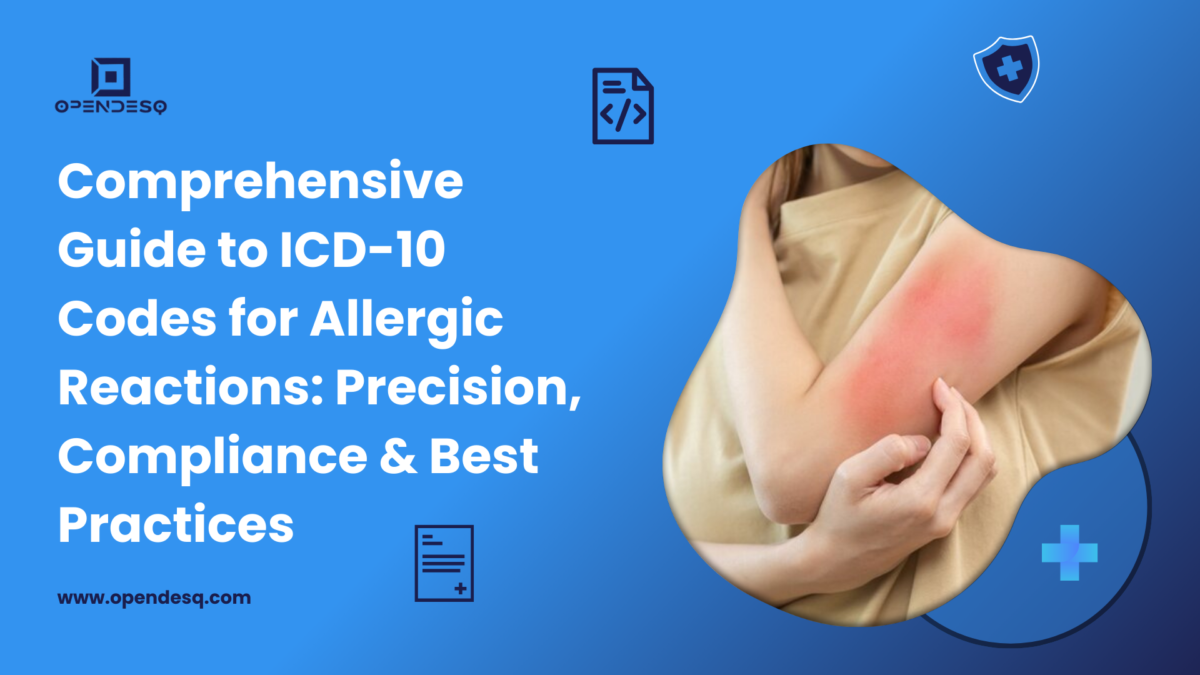
Allergic reactions are common in clinical practice, but coding them correctly is not always simple. If you are a medical coder, biller, healthcare provider, or practice administrator, you already know how much accurate ICD-10 coding matters. It affects patient records, claim approvals, reimbursement, compliance, and even long term healthcare data.
In this guide, I will walk you through ICD-10 coding for allergic reactions in a clear, practical, and human way. Think of this as a conversation where I explain not just what the codes are, but how to think through them like an experienced coder. We will move step by step, starting with the basics, and building toward confident, error free coding decisions.
Introduction to ICD-10-CM for Allergic Reactions
ICD-10-CM stands for International Classification of Diseases, Tenth Revision, Clinical Modification. These codes are used across the United States healthcare system to describe diagnoses, symptoms, and conditions in a standardized way.
Every time a patient experiences an allergic reaction, whether it is mild itching or life threatening anaphylaxis, the condition must be documented and coded correctly. This is not just about billing. Accurate coding supports:
- Proper patient care and continuity of treatment
- Clean claims submission and faster reimbursements
- Compliance with payer and regulatory guidelines
- Reliable public health data and research
When allergic reactions are coded incorrectly or too vaguely, it can lead to denied claims, delayed payments, audits, and confusion in the medical record. That is why understanding ICD-10 codes for allergic reactions is not optional. It is essential.
As someone working in healthcare or medical coding, your goal is always specificity. The more clearly the allergic reaction is defined, the stronger the claim and the better the documentation quality.
Why Accurate Allergic Reaction Coding Is So Important
Let us talk honestly for a moment. Allergic reactions are one of the most commonly miscoded conditions. The reason is simple. Many reactions look similar on the surface, but ICD-10 treats them very differently.
For example:
- A true allergic reaction is not coded the same way as an adverse drug effect
- Poisoning codes follow different rules than allergy codes
- Anaphylaxis requires a higher level of detail and urgency in coding
If these distinctions are missed, the result is often claim rejection or underpayment.
Accurate coding also protects healthcare providers. It shows that the documentation supports the level of care given, especially in emergency or severe reaction cases. For coders and billers, correct ICD-10 selection reduces rework and saves valuable time.
Overview of Key ICD-10 Code Categories for Allergic Reactions
Before diving into individual codes, it helps to see the bigger picture. Allergic reactions are not stored in one single ICD-10 section. Instead, they are spread across several code families, each serving a different clinical purpose.
Understanding which category to look in is the first decision you make as a coder.
T78 Codes for Adverse Effects and Allergic Reactions
The T78 category is one of the most important sections for allergic reaction coding. It falls under Injury, Poisoning and Certain Other Consequences of External Causes.
These codes are commonly used for:
- Anaphylactic shock due to food or other substances
- Other specified allergic reactions
- Allergic reactions not otherwise classified
Most T78 codes require a seventh character to indicate the type of encounter, such as initial or subsequent care. This is where many errors happen, and we will cover that in detail later.
J30 Codes for Allergic Rhinitis
The J30 series is used when the allergic condition affects the nasal passages. This includes:
- Seasonal allergic rhinitis
- Perennial allergic rhinitis
- Allergic rhinitis due to specific triggers like pollen or animal dander
These codes are often used in outpatient and primary care settings and do not use seventh characters.
L23 to L25 Codes for Contact Dermatitis
When the allergic reaction appears on the skin due to direct contact with an allergen, contact dermatitis codes are used.
These codes distinguish between:
- Allergic contact dermatitis
- Irritant contact dermatitis
- Dermatitis due to specific substances like metals, cosmetics, or plants
Clear documentation of the cause is critical here to avoid unspecified coding.
L50 Codes for Urticaria
Urticaria, also known as hives, has its own category. These codes are used when the primary manifestation is raised, itchy welts on the skin.
The L50 series includes:
- Allergic urticaria
- Idiopathic urticaria
- Other specified types of hives
Choosing the correct subtype depends on whether the cause is known and documented.
Z Codes for Allergy History and Status
Z codes do not describe an active allergic reaction. Instead, they indicate a patient’s allergy status.
Common examples include:
- Food allergy status
- Drug allergy status
These codes are often used as secondary diagnoses and are very important for patient safety, especially in long term care or surgical settings.
Setting the Foundation for Accurate Coding Decisions
At this stage, the goal is not to memorize codes. The goal is to understand how allergic reactions are categorized and why ICD-10 separates them this way.
Every correct coding decision starts with three simple questions:
- Is this a true allergic reaction, an adverse effect, or poisoning
- What body system or clinical presentation is involved
- Is the reaction active, historical, or a follow up encounter
As we continue, I will guide you through each category in depth, starting with the most commonly used and most misunderstood group, the T78 codes. This is where specificity, sequencing, and documentation really matter.
Detailed Breakdown of T78 Codes for Allergic Reactions and Adverse Effects
Now let us move into the most critical and most confusing part of allergic reaction coding. The T78 code range. If you work in coding or billing, you have probably seen these codes cause denials, audits, or endless back and forth with providers. The reason is simple. These codes demand precision.
The T78 category is used for allergic reactions and adverse effects that are not classified elsewhere. It lives in the Injury and Poisoning chapter of ICD-10, which means extra rules apply, especially around sequencing and seventh characters.
Let us slow this down and walk through it carefully.
Understanding the Purpose of T78 Codes
T78 codes are used when a patient experiences an allergic reaction that does not fall neatly under skin, respiratory, or other system specific categories. These are often systemic reactions, meaning the body reacts as a whole.
This category includes:
- Anaphylactic shock
- Other allergic reactions caused by food, drugs, or unknown substances
- Allergic reactions that require emergency or acute care
These codes are diagnosis driven. That means the provider documentation must clearly state that an allergic reaction occurred and describe the trigger when known.
Key T78 Code Subcategories You Must Know
T78.0 Anaphylactic Shock Due to Adverse Food Reaction
This code is used when the provider documents anaphylactic shock specifically caused by food. This is a life threatening condition and must be coded with the highest level of specificity available.
Important points to remember:
- The term anaphylactic shock must be clearly documented
- The reaction must be linked to food
- A seventh character is required
Example documentation:
Patient developed anaphylactic shock after consuming peanuts.
Correct coding approach:
- T78.01XA Anaphylactic shock due to peanuts, initial encounter
If the specific food is documented, always use the most specific subcategory.
T78.1 Other Adverse Food Reactions, Not Elsewhere Classified
This code applies when a food reaction occurs but does not rise to the level of anaphylactic shock.
Common scenarios include:
- Swelling of lips or tongue
- Gastrointestinal distress
- Skin reactions after eating a certain food
This is where many coders mistakenly jump to unspecified codes. Do not do that if the documentation gives you enough detail.
Example documentation:
Patient experienced hives and throat itching after eating shellfish.
Correct coding approach:
- T78.1XXA Other adverse food reaction, initial encounter
T78.2 Anaphylactic Shock, Unspecified
This code is used when anaphylaxis is clearly documented, but the trigger is not identified.
This does not mean the code is wrong. It means the documentation does not specify the cause.
Use this code when:
- Anaphylactic shock is documented
- No food, drug, or substance is identified as the cause
Example documentation:
Patient arrived in ER with anaphylactic shock. Trigger unknown.
Correct coding approach:
- T78.2XXA Anaphylactic shock, unspecified, initial encounter
Whenever possible, encourage better documentation to avoid unspecified coding in future encounters.
T78.3 Angioneurotic Edema
Angioneurotic edema refers to deep tissue swelling, often affecting the face, lips, tongue, or airway.
This code is used when:
- Swelling is the primary clinical finding
- The provider documents angioedema or angioneurotic edema
This may occur with or without anaphylaxis, so read the note carefully.
Example documentation:
Patient presents with facial swelling and lip edema due to allergic reaction.
Correct coding approach:
- T78.3XXA Angioneurotic edema, initial encounter
T78.4 Allergy, Unspecified
This code should be used with caution. It is appropriate only when:
- An allergic reaction is clearly documented
- No details about the allergen or reaction type are available
This is often seen in brief emergency notes or incomplete documentation.
Best practice tip:
If you see this code often, it is a sign that provider documentation needs improvement.
T78.9 Adverse Effect, Unspecified
This code is frequently misused. It is not the same as an allergic reaction.
Use T78.9 only when:
- An adverse effect is documented
- The reaction does not meet criteria for a true allergy
This distinction becomes extremely important in drug related cases, which we will cover next.
Common Coding Mistakes with T78 Codes
Let me point out a few mistakes that happen again and again:
- Using T78 codes without a seventh character
- Coding an adverse drug effect as an allergy
- Choosing unspecified codes when details are clearly documented
- Missing secondary codes for symptoms or complications
Avoiding these mistakes immediately improves claim acceptance and coding accuracy.
How T78 Codes Set the Stage for Proper Sequencing
Because T78 codes fall under injury and poisoning guidelines, sequencing rules apply. In many cases:
- The allergic reaction code is primary
- Additional codes describe manifestations such as respiratory distress or hypotension
This is especially important in emergency and inpatient settings.
Coding Anaphylaxis with Precision and Clinical Accuracy
Now let us focus on anaphylaxis, because this is where accuracy truly matters. Anaphylaxis is a severe, potentially fatal allergic reaction. From a coding perspective, it demands clarity, correct sequencing, and full attention to documentation details.
When anaphylaxis is involved, payers expect clean, specific coding. Any ambiguity can easily lead to claim delays or audits.
What Makes Anaphylaxis Different from Other Allergic Reactions
Anaphylaxis is not just a stronger allergy. It is a systemic reaction that often involves multiple organ systems at the same time.
Clinically, it may include:
- Difficulty breathing or airway swelling
- Hypotension or shock
- Rapid onset after exposure to an allergen
- Loss of consciousness in severe cases
From a coding standpoint, this means:
- You must identify the cause whenever possible
- You must choose the correct anaphylaxis code, not a general allergy code
- You must apply proper sequencing rules
ICD-10 Codes Commonly Used for Anaphylaxis
Food Induced Anaphylaxis
When documentation clearly states that food caused the anaphylactic reaction, use the most specific food related anaphylaxis code available under T78.0.
Examples of foods often documented:
- Peanuts
- Shellfish
- Tree nuts
- Eggs or dairy
Correct coding approach:
- Always code the anaphylactic shock first
- Add a food allergy status code if documented
Example scenario:
Patient experienced anaphylactic shock after consuming shrimp.
Correct coding:
- T78.02XA Anaphylactic shock due to shellfish, initial encounter
- Z91.013 Food allergy to shellfish, if documented
Drug Induced Anaphylaxis
Drug induced anaphylaxis follows different logic. You must first determine whether the reaction is an allergic response or an adverse effect.
True drug allergy involves:
- Hypersensitivity response
- Prior exposure or immune mediated reaction
If the provider documents anaphylaxis due to a drug allergy, code the anaphylaxis first and then identify the drug using additional codes from the appropriate category.
Example scenario:
Patient developed anaphylaxis after receiving penicillin.
Correct coding approach:
- T78.2XXA Anaphylactic shock, unspecified, if no specific drug code exists
- Additional code to identify the drug involved
- Z88.0 Allergy status to penicillin, if documented
Never code this as poisoning if the medication was given correctly.
Unspecified Anaphylaxis
Sometimes, despite best efforts, the cause of anaphylaxis is unknown.
Use unspecified anaphylaxis codes only when:
- Anaphylaxis is clearly diagnosed
- No trigger is identified in the record
This commonly occurs in emergency settings where immediate stabilization is the priority.
Best practice:
If unspecified anaphylaxis is used, review future encounters for clarification and update coding when possible.
Sequencing Rules for Anaphylaxis Coding
Sequencing is one of the most misunderstood aspects of anaphylaxis coding.
General rule:
- Code the anaphylactic shock first
- Follow with codes for manifestations or complications
Examples of secondary codes may include:
- Acute respiratory failure
- Hypotension
- Laryngeal edema
The primary diagnosis should always reflect the main reason for the encounter. In anaphylaxis cases, that reason is the shock itself.
Allergic Reaction vs Adverse Effect vs Poisoning
This distinction is critical, especially in drug related cases. Let us simplify it.
Allergic Reaction
This is an immune mediated response. It occurs even when the drug or substance is given correctly.
Example:
Patient develops hives and airway swelling after a normal dose of antibiotic.
Correct approach:
- Code the allergic reaction
- Do not use poisoning codes
Adverse Effect
An adverse effect occurs when a medication causes a side effect at a properly administered dose, but without an immune response.
Example:
Patient experiences nausea due to prescribed medication.
Correct approach:
- Use adverse effect codes
- Do not code as allergy
Poisoning
Poisoning involves:
- Overdose
- Incorrect drug administration
- Wrong substance taken
Example:
Patient accidentally takes double the prescribed dose.
Correct approach:
- Use poisoning codes
- Follow poisoning sequencing rules
Understanding this difference protects you from one of the most common and costly coding errors.
Real World Example to Bring It Together
Let us walk through a realistic scenario.
Scenario:
A patient presents to the emergency department with difficulty breathing, facial swelling, and low blood pressure after eating a cookie containing peanuts. This is the first visit for this condition.
Correct coding logic:
- Primary diagnosis is anaphylactic shock due to food
- Use the initial encounter seventh character
Correct code:
- T78.01XA Anaphylactic shock due to peanuts, initial encounter
This clear and logical approach is exactly what payers expect.
ICD-10 Codes for Specific Types of Allergic Reactions
Now let us move into the allergic conditions you see every day in clinics, outpatient settings, and routine visits. These reactions may not always be life threatening like anaphylaxis, but they still require accurate coding to reflect the patient’s condition and support proper billing.
This section will help you confidently choose the right ICD-10 codes for common allergic presentations without overcoding or undercoding.
Allergic Rhinitis ICD-10 Codes J30 Series
Allergic rhinitis is one of the most frequently diagnosed allergic conditions. These codes are found in the J30 category and are used when symptoms involve the nasal passages due to an allergic trigger.
Common Types of Allergic Rhinitis
Allergic rhinitis may be seasonal or year round, depending on the allergen.
Examples include:
- Pollen related allergies
- Animal dander sensitivity
- Dust mite allergy
Key J30 Codes to Know
| ICD-10 Code | Description |
| J30.1 | Allergic rhinitis due to pollen |
| J30.2 | Other seasonal allergic rhinitis |
| J30.81 | Allergic rhinitis due to animal hair and dander |
| J30.89 | Other allergic rhinitis |
| J30.9 | Allergic rhinitis, unspecified |
Best practice tip:
Always look for documentation of the allergen. If pollen, animals, or another cause is mentioned, do not use the unspecified code.
Contact Dermatitis ICD-10 Codes L23 to L25
Contact dermatitis occurs when the skin reacts after direct exposure to an allergen or irritant. These codes require careful reading of provider notes.
Allergic vs Irritant Contact Dermatitis
This distinction is essential.
- Allergic contact dermatitis is immune mediated
- Irritant contact dermatitis is caused by direct chemical or physical irritation
Common ICD-10 Codes for Contact Dermatitis
| ICD-10 Code | Description |
| L23.0 | Allergic contact dermatitis due to metals |
| L23.2 | Allergic contact dermatitis due to cosmetics |
| L23.7 | Allergic contact dermatitis due to plants |
| L24.- | Irritant contact dermatitis |
| L25.- | Unspecified contact dermatitis |
Best practice tip:
If the allergen is documented, always use the specific L23 code. Avoid L25 unless absolutely necessary.
Urticaria ICD-10 Codes L50 Series
Urticaria, commonly known as hives, is another frequent allergic presentation. These codes focus on skin findings rather than systemic reactions.
When to Use L50 Codes
Use urticaria codes when:
- Raised, itchy welts are the primary symptom
- No anaphylaxis is present
Common Urticaria Codes
| ICD-10 Code | Description |
| L50.0 | Allergic urticaria |
| L50.1 | Idiopathic urticaria |
| L50.8 | Other urticaria |
| L50.9 | Urticaria, unspecified |
Coding tip:
If the provider links hives to an allergen, L50.0 is usually appropriate.
Food Allergy Status Codes Z91.01 Series
Food allergy status codes do not represent an active reaction. They describe a known allergy that may affect care decisions.
When to Use Food Allergy Status Codes
Use these codes when:
- A food allergy is documented in the history
- The patient is not currently experiencing a reaction
Examples include:
- Peanut allergy
- Shellfish allergy
| ICD-10 Code | Description |
| Z91.010 | Allergy to peanuts |
| Z91.013 | Allergy to shellfish |
| Z91.018 | Allergy to other foods |
Important reminder:
Do not use Z codes alone when an active allergic reaction is being treated.
Drug Allergy Status Codes Z88 Series
Drug allergy status codes indicate a known allergy to a medication.
Common Z88 Codes
| ICD-10 Code | Description |
| Z88.0 | Allergy to penicillin |
| Z88.1 | Allergy to other antibiotic agents |
| Z88.8 | Allergy to other drugs |
These codes are often used as secondary diagnoses to alert providers and protect patient safety.
Applying Seventh Characters for Allergic Reaction Codes
This is one of the most important technical rules in allergic reaction coding.
When Seventh Characters Are Required
Seventh characters are required for codes in the Injury and Poisoning chapter, including many T78 codes.
The seventh character indicates the encounter type:
- A for initial encounter
- D for subsequent encounter
- S for sequela
Example of Proper Use
| Code | Meaning |
| T78.40XA | Allergy, unspecified, initial encounter |
| T78.40XD | Allergy, unspecified, subsequent encounter |
| T78.40XS | Allergy, unspecified, sequela |
Coding reminder:
An initial encounter does not mean first visit only. It means active treatment is still being provided.
Why Documentation Is the Foundation of Accurate Coding
No ICD-10 code is stronger than the documentation behind it.
For allergic reactions, providers should clearly document:
- The allergen or suspected cause
- Type of reaction
- Severity
- Body systems involved
- Encounter type
When documentation is incomplete, coders are forced to use unspecified codes, increasing denial risk.
Common Coding Scenarios, Best Practices, and Real World Application
Now let us bring everything together and apply it to real situations you face every day. This is where strong coders separate themselves from average ones. Knowing the codes is one thing. Knowing how to apply them correctly in real patient scenarios is what truly matters.
Think of this section as sitting beside an experienced coder who walks you through decisions step by step.
Scenario Based Coding Examples for Allergic Reactions
Scenario One: Emergency Food Allergy Reaction
Clinical summary:
A patient presents to the emergency department with lip swelling, hives, and difficulty breathing after eating shrimp. The provider documents anaphylactic shock due to shellfish. This is the first time the patient is treated for this episode.
Coding logic:
- The primary condition is anaphylactic shock
- The cause is clearly identified as shellfish
- This is active treatment
Correct coding:
- T78.02XA Anaphylactic shock due to shellfish, initial encounter
Optional secondary code if documented:
- Z91.013 Allergy to shellfish
Why this works:
The code reflects severity, cause, and encounter type accurately.
Scenario Two: Drug Related Allergic Reaction Without Anaphylaxis
Clinical summary:
A patient develops a generalized rash and itching after taking a prescribed antibiotic at the correct dose. The provider documents an allergic reaction but no anaphylaxis.
Coding logic:
- This is a true allergic reaction
- No overdose or misuse occurred
- Symptoms are skin related
Correct coding:
- T78.40XA Allergy, unspecified, initial encounter
- L50.0 Allergic urticaria, if documented
Do not use poisoning codes here. That is a very common error.
Scenario Three: Seasonal Allergic Rhinitis Visit
Clinical summary:
Patient presents with sneezing, nasal congestion, and itchy eyes every spring. Provider documents allergic rhinitis due to pollen.
Correct coding:
- J30.1 Allergic rhinitis due to pollen
This is a straightforward case, but it highlights the importance of reading documentation carefully and avoiding unspecified codes.
Scenario Four: Contact Dermatitis from Cosmetics
Clinical summary:
Patient develops a facial rash after using a new cosmetic product. Provider documents allergic contact dermatitis due to cosmetics.
Correct coding:
- L23.2 Allergic contact dermatitis due to cosmetics
This code clearly identifies the cause and avoids unnecessary ambiguity.
Best Practices for Accurate Allergic Reaction Coding
Let me share practical habits that experienced coders follow consistently.
Always Code to the Highest Level of Specificity
If the documentation gives you the allergen, use it. If the reaction type is clear, reflect that in your code. Specific codes lead to cleaner claims and fewer payer questions.
Never Guess the Cause
If the provider does not document the allergen, do not assume. Use unspecified codes when required, but flag documentation improvement opportunities when possible.
Sequence Codes Correctly
The main reason for the visit comes first. Supporting conditions come next. This matters greatly in emergency and inpatient cases.
Use Z Codes Appropriately
Z codes for allergy status are important, but they do not replace active diagnosis codes. Use them as secondary codes when relevant.
Spot the Error Coding Challenge
Let us test your thinking with a quick challenge.
Challenge Scenario
Clinical summary:
Patient experiences throat swelling and hypotension after receiving a standard dose of a prescribed medication. The coder assigns a poisoning code.
What is wrong here?
Correct answer:
This is not poisoning. The medication was given correctly. This is an allergic reaction.
Correct coding approach:
- Use an anaphylaxis or allergy code depending on documentation
- Add drug allergy status if documented
This type of mistake is one of the biggest causes of denied claims in allergy related encounters.
Importance of Clinical Documentation for Coding Success
Strong coding always starts with strong documentation.
For allergic reactions, providers should document:
- Specific allergen
- Type of reaction
- Severity and symptoms
- Encounter type
- Any complications
When documentation is clear, coding becomes faster, more accurate, and more defensible.
Frequently Asked Questions About ICD-10 Codes for Allergic Reactions
Before we close this guide, let us address the questions that coders, billers, and healthcare professionals ask most often. These are real concerns that come up during chart reviews, claim follow ups, and audits.
What is the most common ICD-10 code used for allergic reactions
There is no single most common code, because it depends on the type of reaction and the documentation. However, T78.40XA is frequently used when an allergic reaction is documented without clear detail. That said, best practice is always to avoid unspecified codes when more information is available.
Can I code both an allergic reaction and a symptom like rash or swelling
Yes, you can. If the symptom is clinically relevant and documented, it may be coded as a secondary diagnosis. For example, allergic urticaria may be coded alongside a general allergy code when appropriate.
When should I use Z codes for allergies
Z codes are used to indicate a known allergy status, not an active allergic reaction. These codes are often secondary and help alert providers to risks in future care.
What if the provider documentation is unclear
When documentation is unclear, coders should follow official ICD-10-CM guidelines and use the most accurate code supported by the record. Querying the provider for clarification is always the best option when allowed.
How do I know if a reaction is an adverse effect or an allergy
An allergic reaction is immune mediated and often involves symptoms like hives, swelling, or breathing difficulty. An adverse effect is a known side effect of a drug taken correctly without an immune response. This distinction must be supported by provider documentation.
Expert Tips for Avoiding Coding Errors
Let me leave you with proven tips that experienced coding professionals rely on every day.
- Always consult the current year ICD-10-CM guidelines
- Code to the highest level of specificity available
- Review provider documentation carefully before selecting codes
- Pay close attention to seventh character requirements
- Understand the difference between allergy, adverse effect, and poisoning
- Sequence diagnoses based on the main reason for the encounter
- Use coding tools and databases but verify with official sources
- Stay current with continuing education and coding updates
- When uncertain, consult a certified coding professional
Trusted Resources for Continued Learning
Accurate coding requires reliable references. The following resources are essential for anyone coding allergic reactions:
- Official ICD-10-CM coding manuals from AAPC and AHIMA
- Online databases such as ICD10Data and FindACode
- CDC ICD-10-CM Official Guidelines
- Professional organizations like AAPC and AHIMA
- Clinical Documentation Improvement programs
These resources help ensure your coding stays compliant and up to date.
Commitment to Accuracy and Content Currency
This guide is reviewed periodically to reflect the latest ICD-10-CM updates and official guideline changes. It is created and reviewed by certified coding professionals with practical, real world experience in medical coding and compliance.
Last updated: Current ICD-10-CM reporting year
Conclusion
Coding allergic reactions correctly is not about memorizing codes. It is about understanding clinical intent, reading documentation carefully, and applying ICD-10 rules with confidence.
When you focus on specificity, proper sequencing, and clear documentation, you reduce denials, protect revenue, and support better patient care. Whether you are coding anaphylaxis in the emergency department or allergic rhinitis in a clinic visit, the principles remain the same.
Use this guide as your reference, your refresher, and your confidence booster. With the right approach, ICD-10 coding for allergic reactions becomes not just manageable, but precise and professional.