
Mastering Weakness ICD-10 Codes: A Comprehensive Guide for Accurate Documentation and Billing
January 3, 2026
The Ultimate Guide to Hypothyroidism ICD 10 Codes: Specificity, Compliance, and 2024 2025 Updates
January 3, 2026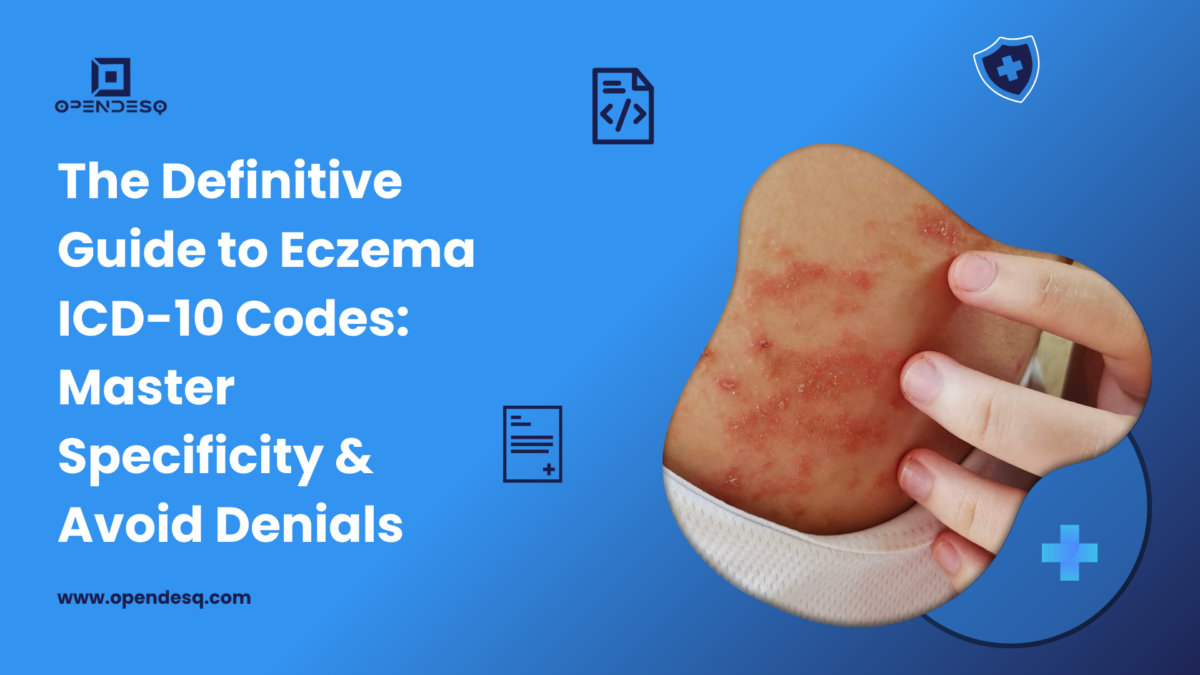
The Complex Landscape of Eczema Coding: Your Guide to Clarity
If you work with medical coding or clinical documentation, you already know that eczema is not as simple as it sounds. On the surface, it looks like a common skin condition. In reality, coding eczema correctly in ICD 10 can feel overwhelming. Between multiple dermatitis types, similar looking conditions, detailed subcategories, and strict payer expectations, even experienced coders can hesitate before selecting a final code.
One small coding decision can have a ripple effect. An unspecified code can trigger a claim denial. A missed Excludes note can lead to compliance issues. Incomplete documentation can slow reimbursement and raise audit risks. And beyond billing, inaccurate coding affects patient records, continuity of care, and even research data.
This pressure is real, especially when you are expected to code quickly and accurately while staying aligned with ever evolving ICD 10 guidelines.
This guide exists to remove that uncertainty.
You are not here for surface level explanations. You need clarity. You need specificity. You need to understand not just which eczema ICD 10 code to use, but why that code matters and how to defend it with documentation.
By reading this guide, you will gain a clear and practical understanding of eczema ICD 10 coding. You will learn how to navigate laterality, chronicity, and coding hierarchy with confidence. You will see how Excludes1 and Excludes2 notes actually work in real clinical scenarios. You will also understand how accurate coding directly supports reimbursement, compliance, and patient care.
Everything here is built to help you code smarter, faster, and with confidence.
This content is designed as a long term reference, reviewed through the lens of certified medical coding standards and aligned with official ICD 10 CM guidance. It is written to support real world coding decisions, not just textbook definitions.
Understanding Eczema and the Imperative of Accurate ICD-10 Coding
What Is Eczema? A Clear Clinical Overview
Eczema, also referred to as dermatitis, is not a single disease. It is a broad group of inflammatory skin conditions that share common features such as itching, redness, swelling, and visible skin lesions. These conditions vary in cause, appearance, severity, and duration, which is exactly why accurate documentation and coding are so important.
In clinical practice, eczema often presents as a chronic and relapsing condition. Patients may experience periods of flare ups followed by partial or complete remission. For many, especially those with atopic dermatitis, eczema can persist for years and significantly affect daily life, sleep quality, and mental health.
Common forms of eczema you will see documented include atopic dermatitis, contact dermatitis, dyshidrotic eczema, nummular eczema, and seborrheic dermatitis. While these conditions may appear similar at first glance, they are clinically distinct and fall under different ICD-10 code categories. This distinction is critical for correct coding.
From a patient care perspective, precise identification of the eczema type helps guide treatment decisions. From a coding perspective, it ensures that the diagnosis accurately reflects the provider’s clinical judgment and supports proper reimbursement.
The Foundation of ICD-10 Codes in Healthcare
ICD-10-CM, or the International Classification of Diseases, Tenth Revision, Clinical Modification, is the standard diagnostic coding system used in the United States. These codes are not just administrative labels. They form the backbone of modern healthcare documentation.
Each ICD-10 code communicates specific clinical information. For eczema, that information may include the type of dermatitis, the cause, the location on the body, and whether the condition is acute or chronic. A code such as L20.811 tells a much clearer clinical story than a general unspecified dermatitis code.
Accurate ICD-10 coding serves several essential purposes in healthcare. It supports correct billing and reimbursement by aligning diagnoses with payer policies. It allows providers to track disease patterns and outcomes over time. It contributes to public health data used for research and policy decisions. Most importantly, it ensures that every clinician involved in a patient’s care understands the diagnosis clearly.
The structure of ICD-10 codes is intentional. The first letter identifies the chapter. For eczema and dermatitis, that chapter is the skin and subcutaneous tissue category, which begins with the letter L. The numbers that follow narrow the diagnosis into specific disease groups and subtypes. Additional characters increase precision, often identifying location or cause.
Why Accurate ICD-10 Coding Matters More Than Ever
Accurate eczema coding is not optional. It directly affects daily operations in healthcare settings.
| Aspect | Importance and Benefit |
| Accurate Reimbursement | Prevents claim denials and ensures timely, appropriate payment for services provided |
| Patient Care and Safety | Creates a clear medical history that supports treatment planning and continuity of care |
| Public Health and Research | Enables reliable disease tracking, outcome analysis, and research accuracy |
| Compliance and Audits | Supports adherence to regulatory requirements and reduces legal or financial risk |
| Practice Efficiency | Minimizes rework, reduces administrative burden, and improves overall workflow |
Each of these benefits connects back to your role, whether you are coding, documenting, billing, or overseeing compliance. When eczema is coded accurately, everyone in the system benefits.
The Critical Importance of Specificity in Eczema Coding
Specificity is one of the most emphasized principles in ICD-10 coding, and eczema coding is no exception. Using the most specific code available is not just best practice. It is an expectation set by official coding guidelines.
From a financial standpoint, unspecified codes often raise red flags with payers. They may result in reduced reimbursement, delayed payments, or outright denials. From a clinical standpoint, vague codes fail to capture the true nature of the patient’s condition.
Specific codes also strengthen data quality. Researchers rely on ICD-10 data to study disease trends, treatment effectiveness, and outcomes. When eczema types are lumped into unspecified categories, that data loses value.
Coding to the highest specificity means capturing laterality when available, identifying the exact type of dermatitis, and recognizing whether the condition is chronic or part of an acute flare. When documentation supports it, your code choice should reflect it.
Always remember this expert principle: code to the highest level of specificity supported by the documentation. This approach aligns with CMS guidance and protects both reimbursement and compliance.
General Principles of Dermatitis and Eczema Coding
Accurate eczema coding starts with a strong understanding of the foundational ICD 10 rules that apply to skin conditions. Before choosing any specific L code, you need to understand how the coding system is structured and how documentation drives every decision you make.
Navigating the ICD-10 Code Hierarchy for Skin Conditions
ICD-10-CM is organized in a hierarchical way. You always begin with a broad category and work your way down to the most specific subcategory available. For eczema and dermatitis, this process starts in Chapter 12, Diseases of the Skin and Subcutaneous Tissue, which includes the L00–L99 code range.
Within this chapter, the L20–L30 block is dedicated to dermatitis and eczema. Each category within this block narrows the diagnosis further. For example, atopic dermatitis falls under L20, while contact dermatitis is separated into allergic, irritant, and unspecified categories under L23, L24, and L25.
When you code eczema, you should always move from the general category to the most detailed code that matches the provider’s documentation. Skipping steps or defaulting to unspecified codes when more detail is available increases the risk of errors and denials.
Documentation Drives Code Selection
ICD-10 coding does not exist in isolation. Every code must be supported by clear clinical documentation. If the provider documents the eczema type, location, cause, or chronic nature, your code must reflect that information.
Incomplete or vague documentation creates problems. It limits specificity, weakens claim support, and increases the likelihood of payer requests for additional information. In many cases, the difference between a clean claim and a denied one comes down to how well the documentation supports the diagnosis code.
This is why strong collaboration between coders and providers is essential. When documentation is unclear or missing key details, querying the provider is not a delay. It is a compliance safeguard.
Expert guidance is simple but critical: thorough clinical documentation is paramount. Every component of the ICD-10 code must be justified by what is written in the medical record.
Understanding Excludes Notes in Eczema Coding
One of the most common sources of confusion in eczema coding is the proper use of Excludes notes. These notes are not optional suggestions. They are mandatory coding instructions that must be followed to avoid incorrect code combinations.
There are two types of Excludes notes in ICD-10: Excludes1 and Excludes2. While they may look similar, they mean very different things.
An Excludes1 note means “not coded here.” It indicates that the conditions listed cannot occur together. If one condition is present, the other should not be coded at the same time for the same encounter.
An Excludes2 note means “not included here.” It indicates that the excluded condition is not part of the current code, but both conditions may exist at the same time and can be coded separately if documented.
Understanding this distinction is essential when working with eczema codes, especially when differentiating dermatitis from infections or overlapping skin conditions.
Practical Application of Excludes Notes
Excludes1 notes often appear when a condition is mutually exclusive with another diagnosis. For example, certain infectious skin conditions cannot be coded alongside general dermatitis codes if they describe the same lesion.
Excludes2 notes are more flexible. A patient may have atopic dermatitis and also develop allergic contact dermatitis. In that case, both conditions can be coded if documentation supports both diagnoses.
Misinterpreting these notes can lead to serious coding errors, including overcoding or undercoding, both of which can trigger audits or denials.
Excludes1 vs Excludes2 in ICD-10 Coding
| Note Type | Meaning | Coding Action | Example Scenario |
| Excludes1 | Not coded here. The two conditions cannot occur together. | Do not code both conditions together. Select the most appropriate single code. | A fungal skin infection code includes an Excludes1 note for dermatitis. If the lesion is fungal in nature, you would not also code a general dermatitis for the same area. |
| Excludes2 | Not included here. The condition is not part of the code, but both conditions may be present. | Code both conditions separately if documented. | A patient with atopic dermatitis also develops allergic contact dermatitis. Both diagnoses are documented and may be coded separately. |
Mastering Excludes notes protects you from incorrect code combinations and strengthens your compliance posture. These rules are not minor technicalities. They are core components of accurate ICD-10 coding.
The Role of Laterality, Severity, and Chronicity in Eczema Coding
Once you understand code hierarchy and Excludes notes, the next layer of accuracy in eczema ICD-10 coding comes from specificity. This is where many claims succeed or fail. Laterality, severity, and chronicity may seem like small details, but in ICD-10, they carry real weight.
Why Coding to the Highest Specificity Matters in Daily Practice
ICD-10 is designed to capture clinical detail. When the system offers a more specific code and the documentation supports it, you are expected to use it. Choosing a vague or unspecified code when better options exist increases audit risk and often leads to denials.
Specificity strengthens the clinical story. It shows payers, auditors, and other providers that the diagnosis was carefully evaluated and clearly documented. It also improves data quality across the healthcare system.
For eczema, specificity most commonly comes from three areas: where the condition is located, how severe it is, and whether it is acute or chronic.
Coding for Laterality and Anatomical Location
Many eczema related ICD-10 codes allow you to identify the exact location of the condition. This may include the trunk, upper limbs, lower limbs, head, neck, or more specific sites such as the arm or leg. Some codes go even further by allowing right, left, or bilateral designation.
For example, atopic dermatitis codes under L20.8 include subcategories that specify the body site involved. A code that identifies eczema on the right arm tells a much clearer story than a general atopic dermatitis code.
Laterality is not optional when it is documented. If the provider clearly states that eczema affects the left leg or both arms, that information must be reflected in the code selection.
When laterality is missing or unclear, the correct step is not to guess. The correct step is to query the provider for clarification. This protects accuracy and compliance.
Understanding the Role of Severity in Eczema Coding
Severity is an important clinical concept in eczema management. Providers often describe eczema as mild, moderate, or severe based on factors such as body surface area involved, intensity of itching, presence of excoriations, sleep disturbance, or response to treatment.
While most L20–L30 codes do not directly include severity as a character in the code itself, severity still matters. It influences medical decision making, treatment intensity, and sometimes the use of additional diagnosis codes for complications.
For example, severe eczema may lead to secondary skin infections, significant lichenification, or sleep disorders. These associated conditions should be coded separately when documented, adding depth and accuracy to the claim.
Once again, documentation is key. Severity must be clearly stated by the provider to be used in coding decisions.
Acute, Chronic, and Unspecified Presentations
Eczema often follows a chronic pattern with intermittent flares. Distinguishing between an acute flare and a chronic condition is clinically meaningful and sometimes directly reflected in ICD-10 codes.
Certain diagnoses, such as lichen simplex chronicus under L28.0, explicitly include chronicity in the code description. In other cases, chronicity may influence the choice between related codes or support additional diagnoses.
Unspecified codes should always be the last option. Codes like L20.9 or L30.9 exist for situations where documentation truly does not allow for greater detail. They are not meant to replace careful documentation and precise coding.
The goal is always the same: reflect the provider’s clinical assessment as accurately as possible using the most specific code available.
Key Factors That Drive Eczema Coding Specificity
| Coding Factor | Description and Impact on Code | Example Codes or Considerations |
| Anatomical Location | Identifies the exact body site affected by eczema | Atopic dermatitis of arm vs generalized atopic dermatitis |
| Laterality | Specifies right, left, or bilateral involvement when available | Right arm, left leg, bilateral hands |
| Severity | Influences associated condition coding and treatment intensity | Secondary infection, excoriations, lichenification |
| Chronicity | Distinguishes long standing disease from acute flares | Lichen simplex chronicus vs unspecified dermatitis |
| Documentation Quality | Determines how much specificity can be applied | Provider notes must support every detail |
When these factors are captured correctly, eczema coding becomes clearer, stronger, and far more defensible.
Key ICD-10 Codes for Eczema in the L20–L30 Range
To code eczema accurately, you must be comfortable navigating the L20–L30 code block. This range is the backbone of dermatitis and eczema coding in ICD-10-CM. Understanding how it is organized saves time, reduces errors, and improves confidence when selecting the final diagnosis code.
Overview of the Dermatitis and Eczema Code Set
The L20–L30 range sits within the ICD-10 chapter for diseases of the skin and subcutaneous tissue. This block is dedicated to inflammatory skin conditions, including eczema, dermatitis, and related disorders such as pruritus and lichen simplex chronicus.
Each category within this range represents a clinically distinct condition. While symptoms may overlap, ICD-10 separates these diagnoses based on cause, presentation, and underlying pathology. That separation is intentional and must be respected during coding.
Using the correct category is the first step toward specificity. Once the correct category is selected, subcodes provide additional detail such as type, cause, or location.
Main Categories Within the L20–L30 Range
The L20–L30 range includes multiple categories, each addressing a specific form of dermatitis or a related condition. Knowing the purpose of each category helps prevent misclassification and improper code selection.
Atopic dermatitis is grouped under L20. Seborrheic dermatitis has its own category under L21. Contact dermatitis is divided into allergic, irritant, and unspecified types under L23, L24, and L25. Other eczema related conditions, such as dyshidrotic eczema and nummular dermatitis, appear under L30.
Conditions that may result from chronic itching or scratching, such as lichen simplex chronicus, are categorized separately under L28. Pruritus without a specified rash is coded under L29.
This structure reinforces the importance of clinical differentiation. Similar symptoms do not always mean the same diagnosis.
Overview of the L20–L30 ICD-10 Code Range
| ICD-10 Code Range | Category Description | Key Conditions Included |
| L20 | Atopic Dermatitis | Infantile eczema, neurodermatitis, Besnier’s prurigo |
| L21 | Seborrheic Dermatitis | Cradle cap, seborrhea, seborrheic eczema |
| L22 | Diaper Dermatitis | Diaper rash, napkin dermatitis |
| L23 | Allergic Contact Dermatitis | Dermatitis due to allergens such as metals or plants |
| L24 | Irritant Contact Dermatitis | Dermatitis due to chemicals, detergents, or irritants |
| L25 | Unspecified Contact Dermatitis | Contact dermatitis with unidentified cause |
| L26 | Exfoliative Dermatitis | Generalized exfoliative dermatitis, erythroderma |
| L27 | Other Dermatitis | Dermatitis due to ingested substances such as drugs or foods |
| L28 | Lichen Simplex Chronicus and Prurigo | Localized neurodermatitis, prurigo nodularis |
| L29 | Pruritus | Itching without a specific skin diagnosis |
| L30 | Other and Unspecified Dermatitis | Dyshidrotic eczema, nummular dermatitis, eczema NOS |
This table is a high level map. It shows you where each eczema related diagnosis belongs and prevents common mistakes such as coding dyshidrotic eczema under atopic dermatitis or misclassifying pruritus as eczema.
Why This Structure Matters for Accuracy and Compliance
ICD-10-CM guidelines expect coders to select the most accurate category before moving to subcodes. Jumping straight to an unspecified dermatitis code when documentation supports a more precise diagnosis weakens the claim and increases audit exposure.
Official coding guidance from CMS and professional organizations consistently emphasizes correct category selection as the foundation of compliant coding. When you understand the structure of the L20–L30 range, you reduce guesswork and improve consistency.
This knowledge also improves communication with providers. When a diagnosis is unclear, you can ask targeted questions that lead to better documentation and better code selection.
Specific Eczema Types and Their ICD-10 Codes
This is where eczema coding becomes truly technical. Many claim denials and audit issues stem from confusing one eczema type with another or defaulting to unspecified codes when the documentation clearly supports a more precise diagnosis.
Each eczema type has its own ICD-10 category, coding rules, and documentation expectations. Understanding these distinctions is essential for accurate coding and clean claims.
Atopic Dermatitis and ICD-10 Coding Considerations
Atopic dermatitis is one of the most common chronic inflammatory skin conditions. It often begins in childhood and follows a relapsing pattern. ICD-10 classifies atopic dermatitis under the L20 category.
Specific codes within this category allow for better detail, especially when location is documented.
L20.0 is used for prurigo gestationis, a pregnancy related form of atopic dermatitis.
L20.8 covers other forms of atopic dermatitis and includes subcodes for specific anatomical sites when available.
L20.9 is reserved for unspecified atopic dermatitis and should only be used when no further detail is documented.
When coding atopic dermatitis, documentation should ideally include location, chronicity, and any complications such as secondary infection or lichenification. These associated conditions often require additional codes.
Contact Dermatitis: Allergic, Irritant, and Unspecified
Contact dermatitis is divided into three separate categories in ICD-10, and this distinction is critical.
Allergic contact dermatitis falls under L23. These codes identify dermatitis caused by an immune response to a specific allergen such as metals, plants, cosmetics, or chemicals. Identifying and documenting the allergen is key to selecting the correct code.
Irritant contact dermatitis is coded under L24. This form results from direct skin damage caused by substances like detergents, solvents, oils, or repeated handwashing. Unlike allergic contact dermatitis, it does not involve an immune response.
Unspecified contact dermatitis is coded under L25 and should only be used when documentation does not identify whether the cause is allergic or irritant in nature.
Accurate differentiation between these categories improves specificity and supports payer expectations.
Seborrheic Dermatitis and Common Coding Pitfalls
Seborrheic dermatitis is coded under L21 and commonly affects areas rich in sebaceous glands such as the scalp, face, and upper chest.
L21.0 is used for seborrhea capitis, often referred to as cradle cap in infants.
L21.1 applies to infantile seborrheic dermatitis.
L21.8 covers other forms of seborrheic dermatitis.
L21.9 is used when the condition is unspecified.
One common mistake is confusing seborrheic dermatitis with atopic dermatitis or psoriasis. Clear provider documentation helps avoid misclassification.
Dyshidrotic Eczema and Nummular Dermatitis
Dyshidrotic eczema, also known as pompholyx, is coded under L30.1. It is characterized by small, intensely itchy blisters on the palms and soles. This condition has a distinct clinical presentation and should not be grouped under general dermatitis.
Nummular dermatitis, also called discoid eczema, is coded under L30.0. It presents as coin shaped, itchy, scaly lesions and is often worsened by dry environments.
Both of these conditions fall under the broader L30 category but have their own specific codes that should be used whenever documented.
Lichen Simplex Chronicus and Prurigo
Lichen simplex chronicus is a result of chronic scratching or rubbing and is coded under L28.0. It represents a chronic condition and includes chronicity directly in the code description.
Prurigo nodularis is coded under L28.1 and presents as firm, itchy nodules often associated with prolonged scratching.
These conditions are often secondary to underlying eczema or pruritus and may require multiple diagnosis codes to fully capture the clinical picture.
Specific Eczema Types and Their ICD-10 Codes
| Eczema Type or Condition | ICD-10 Code(s) | Description and Coding Notes | Example Scenario |
| Atopic Dermatitis | L20.0, L20.8, L20.9 | Chronic inflammatory condition. Use site specific subcodes when available. Code complications separately if documented. | A child with chronic eczema affecting both arms and legs with skin thickening. Code L20.81 plus L28.0 for lichen simplex chronicus. |
| Allergic Contact Dermatitis | L23.- | Immune mediated reaction. Identify and document the allergen for accurate coding. | Rash on wrist caused by nickel exposure from jewelry. Code L23.0. |
| Irritant Contact Dermatitis | L24.- | Caused by direct skin damage from irritants. Requires documentation of the irritant. | Hand dermatitis in a healthcare worker due to frequent handwashing. Code L24.0. |
| Seborrheic Dermatitis | L21.0, L21.1, L21.8, L21.9 | Affects sebaceous areas. Infant and adult forms coded separately. | Adult with greasy scales on scalp and eyebrows. Code L21.8. |
| Dyshidrotic Eczema | L30.1 | Characterized by itchy blisters on hands or feet. | Recurrent vesicular eruptions on palms and soles. Code L30.1. |
| Nummular Dermatitis | L30.0 | Coin shaped lesions often worsened by dry skin. | Circular scaly patches on lower legs. Code L30.0. |
| Lichen Simplex Chronicus | L28.0 | Thickened skin due to chronic scratching. Often secondary. | Long standing itchy ankle lesion with skin thickening. Code L28.0. |
| Dermatitis Unspecified | L30.9 | Use only when no further detail is documented. Avoid when possible. | Initial visit with vague rash documentation pending evaluation. |
Coding for Location, Severity, and Chronicity in Real World Practice
Accurate eczema coding depends heavily on how well anatomical site, severity, and disease course are captured in the medical record. These elements turn a general diagnosis into a precise, defensible ICD-10 code.
Incorporating Anatomical Site Into Eczema Codes
Anatomical location is one of the most valuable details in eczema coding. Many codes within the L20–L30 range allow or require site specific reporting. When the provider documents where the eczema is located, that information must be reflected in the code.
Commonly documented sites include the head and neck, trunk, upper limbs, and lower limbs. Some atopic dermatitis codes under L20.8 provide even greater detail, identifying specific areas such as the arm or leg.
Laterality is equally important. If eczema affects the right arm, left leg, or both sides of the body, the code should reflect that. Laterality improves clinical clarity and strengthens claim accuracy.
When documentation lacks site or laterality detail, the correct action is to query the provider. Guessing or defaulting to unspecified codes weakens compliance and reimbursement support.
Documenting and Coding for Severity
Severity plays a central role in eczema management. Providers often describe severity based on the extent of skin involvement, the intensity of itching, the presence of excoriations or infection, and the impact on daily activities or sleep.
While severity is not always directly embedded in L20–L30 codes, it influences coding in several important ways. Severe eczema may justify additional diagnosis codes for complications such as secondary bacterial infection, excoriations, or lichenification. It may also support higher level evaluation and management services.
Coders should never infer severity. Only documented clinical descriptions should be used. If severity is implied but not clearly stated, a clarification query is appropriate.
Acute, Chronic, and Unspecified Presentations
Eczema frequently follows a chronic course with intermittent flares. Distinguishing between acute episodes and chronic disease is clinically meaningful and sometimes directly affects code selection.
Some codes explicitly include chronicity, such as L28.0 for lichen simplex chronicus. In other cases, chronicity helps determine whether additional diagnoses are appropriate or whether an unspecified code can be avoided.
Unspecified codes such as L20.9 or L30.9 should be used only when documentation truly does not allow for more detail. They are not a shortcut and should not replace proper documentation practices.
Clear documentation of disease duration, recurrence, and response to treatment supports more accurate coding and better reflects the patient’s condition.
Coding Factors That Drive Eczema Specificity
| Coding Factor | Description and Impact on Code | Example Considerations |
| Anatomical Site | Identifies the exact body area affected | Atopic dermatitis of arm versus generalized |
| Laterality | Specifies right, left, or bilateral involvement | Right hand, left leg, both arms |
| Severity | Influences associated condition coding | Secondary infection, excoriations |
| Chronicity | Distinguishes long standing disease from acute flares | Lichen simplex chronicus versus dermatitis NOS |
| Documentation Quality | Determines achievable specificity | Clear provider notes support precise codes |
When these factors are consistently captured and applied, eczema coding becomes more accurate, more compliant, and easier to defend during audits.
Associated Conditions, Complications, and Differential Coding in Eczema
Eczema rarely exists in isolation. Many patients develop secondary conditions or complications that must be coded separately to fully reflect the clinical picture. Failing to capture these associated diagnoses can lead to undercoding, incomplete claims, and lost reimbursement.
Coding for Secondary Infections Related to Eczema
Chronic scratching and impaired skin barrier function make eczema prone to secondary infections. Providers may document bacterial, viral, or fungal infections occurring on top of existing dermatitis.
When a secondary infection is present, it must be coded in addition to the eczema diagnosis. The eczema code describes the underlying condition, while the infection code captures the complication.
For example, bacterial skin infections such as impetigo or cellulitis may require separate codes from the L or A code ranges, depending on the documented organism and condition. The documentation must clearly indicate that the infection is secondary to eczema.
Sequencing matters. In most cases, the underlying eczema is coded first, followed by the secondary infection, unless official coding guidelines indicate otherwise.
Lichenification, Excoriations, and Chronic Skin Changes
Chronic eczema often leads to repeated scratching, which can cause thickened, leathery skin known as lichenification. When documented, this condition is coded separately under L28.0 for lichen simplex chronicus.
Excoriations, fissures, and other skin breakdowns may also be documented, especially in severe cases. These findings help explain disease severity and may support additional diagnosis codes or higher levels of care.
Coding these conditions separately adds clinical clarity and strengthens documentation support for treatment decisions.
Pruritus and Its Role in Eczema Coding
Pruritus, or itching, is a hallmark symptom of eczema. When itching is an integral part of the eczema diagnosis, it is not coded separately.
However, if pruritus is documented as a separate or persistent complaint without a clearly defined dermatitis, or if it continues despite treatment, a code from the L29 category may be appropriate.
As always, coding decisions depend on provider documentation. Coders should avoid automatically assigning pruritus codes unless documentation supports it as a distinct diagnosis.
Differentiating Eczema From Other Skin Conditions
Several skin conditions can mimic eczema, making accurate diagnosis and coding essential. Psoriasis, fungal infections, scabies, and bacterial dermatitis may present with similar symptoms such as redness, scaling, or itching.
ICD-10 Excludes notes play a key role in preventing incorrect code combinations. For example, fungal infections often carry Excludes1 notes that prohibit simultaneous coding with dermatitis codes for the same lesion.
Clear provider documentation and, when needed, diagnostic testing results help ensure the correct condition is coded.
Coding Associated Conditions and Complications
| Associated Condition | Coding Consideration | Example |
| Secondary Bacterial Infection | Code separately in addition to eczema | Atopic dermatitis with impetigo |
| Lichen Simplex Chronicus | Use L28.0 when documented | Chronic scratching leading to skin thickening |
| Pruritus | Code separately only when documented as distinct | Persistent itching without active dermatitis |
| Fungal Infection | Do not code with eczema if Excludes1 applies | Tinea infection mistaken for eczema |
| Excoriations or Skin Breakdown | May support additional diagnosis coding | Severe eczema with open lesions |
Accurately capturing associated conditions paints a complete clinical picture. It also supports appropriate reimbursement and reduces the risk of payer challenges.
Common Eczema Coding Scenarios and Best Practices
Even when you understand ICD-10 rules and code categories, real world coding can still be challenging. Eczema often presents with multiple diagnoses, follow up visits, and evolving documentation. Knowing how to handle these situations correctly makes a measurable difference in claim outcomes.
Coding Multiple Eczema Related Diagnoses
Patients with eczema frequently have more than one related condition documented during a visit. This may include an underlying form of dermatitis along with complications such as infection, lichenification, or pruritus.
When multiple diagnoses are present, sequencing is critical. In most cases, the primary eczema diagnosis is coded first, followed by secondary conditions that describe complications or related findings. This sequencing reflects the clinical priority and supports medical necessity.
Coders should review the entire encounter note, including assessment and plan sections, to ensure all documented conditions are captured accurately.
Coding for Follow Up and Ongoing Care Visits
Eczema is often managed over multiple visits. Follow up encounters may involve reassessment, medication adjustment, or management of flare ups.
The diagnosis code used for follow up visits should reflect the current clinical status. If the eczema remains active, the same specific diagnosis code may continue to apply. If complications have resolved or new conditions have developed, the coding should be updated accordingly.
Avoid assuming that the diagnosis remains unchanged from prior visits. Each encounter stands on its own and must be coded based on current documentation.
Handling Unspecified Eczema Codes Appropriately
Unspecified codes exist for a reason, but they should be used carefully. Codes such as L20.9 or L30.9 are appropriate only when documentation truly does not provide enough detail to assign a more specific diagnosis.
Using unspecified codes when better documentation is available increases the risk of denials and audits. It also weakens the clinical record.
When documentation is vague, the best practice is to query the provider for clarification rather than defaulting to an unspecified code.
Avoiding Common Eczema Coding Errors
Several errors appear repeatedly in eczema coding. These mistakes can usually be avoided with careful documentation review and adherence to ICD-10 guidelines.
Common pitfalls include confusing contact dermatitis types, missing laterality when documented, ignoring Excludes notes, and failing to code secondary infections. Another frequent issue is coding symptoms that are integral to eczema, such as itching, as separate diagnoses without documentation support.
Awareness of these patterns helps coders prevent repeat errors and improve overall coding accuracy.
Best Practice Tips for Reliable Eczema Coding
| Scenario | Best Practice Approach |
| Multiple diagnoses documented | Sequence primary eczema first, then complications |
| Follow up visit | Code based on current clinical status, not prior visits |
| Vague documentation | Query provider for clarification |
| Unspecified code temptation | Use only when no additional detail is available |
| Overlapping skin conditions | Review Excludes notes carefully |
Applying these best practices consistently leads to cleaner claims, fewer denials, and stronger compliance.
ICD-10 Code Updates and Official Resources for Eczema Coding
ICD-10-CM is not static. Codes are reviewed, revised, added, and deleted every year. Staying current is not optional for accurate eczema coding. Annual updates directly affect compliance, reimbursement, and audit readiness.
Understanding the ICD-10 Update Cycle
ICD-10-CM updates are released annually and become effective on October 1st. These updates may include new codes, revised descriptions, expanded subcategories, or deleted codes.
Even small wording changes can affect how a diagnosis should be coded. Coders and healthcare organizations must review updates every year to ensure continued accuracy.
Failing to apply updated codes can lead to claim rejections or compliance issues, especially when payers enforce new rules immediately after the effective date.
Official and Trusted Coding Resources
Reliable eczema coding depends on authoritative sources. While many websites summarize codes, only official resources should guide final coding decisions.
The ICD-10-CM Official Guidelines for Coding and Reporting remain the primary authority. These guidelines explain sequencing rules, Excludes notes, and documentation expectations that apply to all diagnosis coding.
CMS maintained tools allow coders to verify code validity, descriptions, and updates. Professional organizations such as AAPC and AHIMA provide additional education, coding handbooks, and real world guidance.
Electronic health record systems and billing software often include built in coding assistance. While helpful, these tools should support, not replace, coder judgment and guideline knowledge.
Staying connected to coding forums, webinars, and dermatology specific coding resources also helps address complex or uncommon scenarios.
Frequently Asked Questions About Eczema ICD-10 Coding
What is the most common ICD-10 code for eczema?
There is no single most common code. Eczema coding depends on the specific type documented. Atopic dermatitis is coded under L20, while other forms such as dyshidrotic or nummular eczema fall under L30.
When should unspecified eczema codes be used?
Unspecified codes should be used only when documentation does not support a more specific diagnosis. They should not replace proper documentation or provider clarification.
Can multiple eczema related codes be reported together?
Yes, when documentation supports multiple conditions. For example, atopic dermatitis may be coded along with lichen simplex chronicus or a secondary infection when both are present and documented.
Should itching be coded separately from eczema?
Itching is typically an integral symptom of eczema and is not coded separately unless documented as a distinct diagnosis.
How do Excludes notes affect eczema coding?
Excludes1 notes prohibit certain code combinations. Excludes2 notes allow separate coding when both conditions are present. Ignoring these notes can result in incorrect coding.
What should coders do when documentation is unclear?
The correct action is to query the provider. Clarification supports accurate coding and protects compliance.
The Value of Precision in Eczema ICD-10 Coding
Eczema coding is not just about selecting a code. It is about telling the patient’s clinical story accurately, clearly, and compliantly.
Precise ICD-10 coding supports proper reimbursement, reduces claim denials, and strengthens audit defense. It improves continuity of care by ensuring that every provider understands the diagnosis. It also contributes to reliable data used for research, public health, and healthcare planning.
When coders prioritize specificity, respect Excludes notes, and rely on strong documentation, eczema coding becomes predictable and defensible. Accuracy is not extra work. It is the foundation of efficient, ethical, and financially stable healthcare operations.
This guide exists to support that goal, one clean claim at a time.